


Stainless Steel Tapware
9 Items
-

Sold out Caroma Titan Stainless Steel Bath/Shower Mixer
Checking delivery...$409$0 (-0%) offRRP of $409 -

Sold out Caroma Titan Stainless Steel Sink Mixer
Checking delivery...$915$0 (-0%) offRRP of $915 -

Sold out Caroma Compass Alfresco 316 Stainless Steel Sink Mixer
Checking delivery...$896$0 (-0%) offRRP of $896 -
Lifetime Warranty

Sold out Meir Outdoor Round Wall Shower Mixer Stainless Steel
Checking delivery...$499$0 (-0%) offRRP of $499 -

Sold out Caroma Titan Stainless Steel Bath/Shower Mixer with Diverter
Checking delivery...$588$0 (-0%) offRRP of $588 -

Sale On Now!
Up to 70% off across the store, plus free towels and mirrors up for grabs on orders over $800*
-
Lifetime Warranty

Sold out Meir Outdoor Round Kitchen Mixer Stainless Steel
Checking delivery...$749$0 (-0%) offRRP of $749 -
$121 Off RRPCoastal Rated
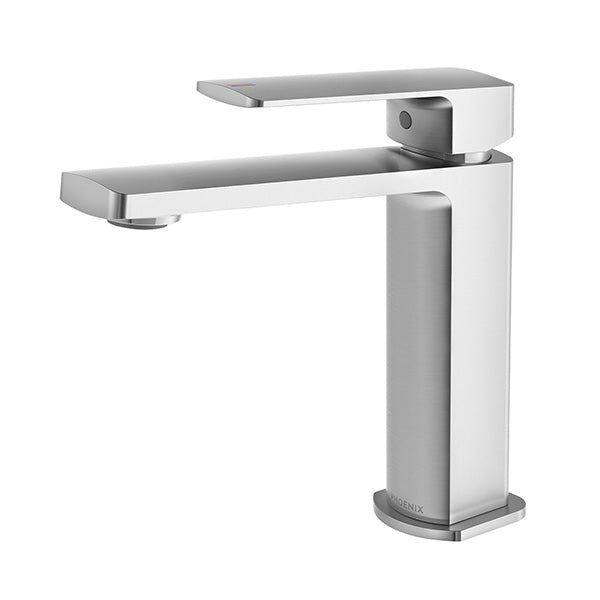
Sold out Phoenix Enviro316 Basin Mixer Stainless Steel
Checking delivery...$488$121 (-19%) OFFRRP of $609$121 (-20%) offRRP of $609 -
$163 Off RRP
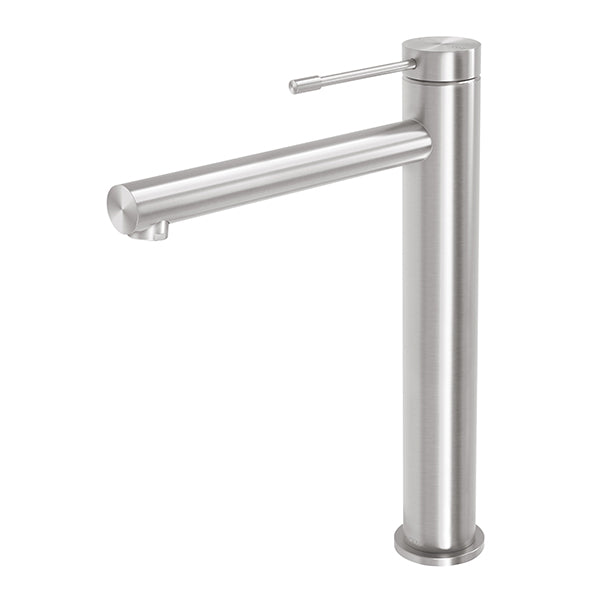
Sold out Phoenix Vivid Slimline Vessel Mixer 316 Stainless Steel
Checking delivery...$927$163 (-14%) OFFRRP of $1,090$163 (-15%) offRRP of $1,090 -
Coastal Rated
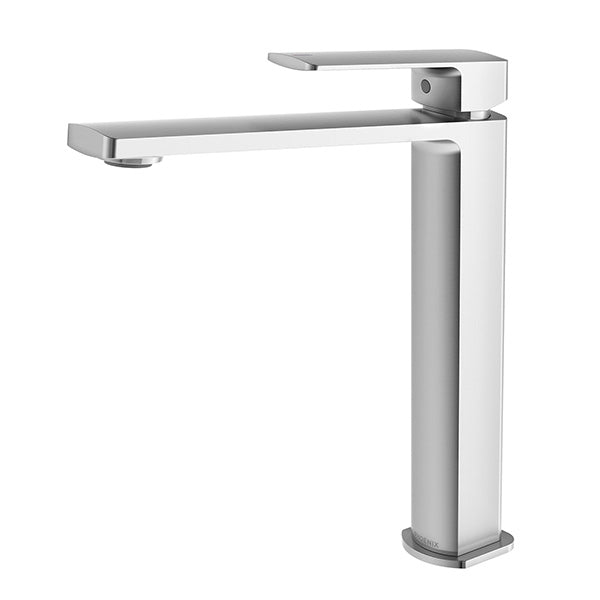
Sold out Phoenix Enviro316 Vessel Mixer Stainless Steel
Checking delivery...$681$0 (-0%) offRRP of $681 -


Stainless steel tapware buying guide
Stainless steel tapware is made from the metal itself, not from plated brass, which gives it a plain, tough, silver look and very strong corrosion resistance. This page holds stainless steel taps for the kitchen, basin, shower and bath: pull out and gooseneck sink mixers, basin mixers, shower and bath mixers and spouts, in brushed and satin stainless, with some in 316 grade. The guide below explains what the material is, how the grades differ, where it suits best, how to care for it, and what to measure before you order each type of tap.
What stainless steel tapware is
Stainless steel is iron with at least about 10.5 percent chromium, which forms a thin invisible layer on the surface and stops it rusting. A stainless steel tap is cast or machined from that alloy, so the colour runs through the metal. A plated tap is brass with a thin coating, and if the coating is damaged the brass shows through. With stainless steel there is no coating to wear off, which is why it holds up so well in a busy kitchen, a laundry or a coastal home. Most of the stainless taps here have a brushed or satin surface, with a fine grain that hides fingerprints and water marks.
304 and 316 stainless steel
The two grades you will see on tapware are 304 and 316. Both resist rust and suit a household tap. Grade 316 adds 2 to 3 percent molybdenum, which improves resistance to chlorides and acids, so it is the better choice near the sea, around a pool or in a damp outdoor spot. A 316L tap is the low carbon version, with a maximum carbon content of 0.03 percent, which resists corrosion a little further and welds more cleanly. For a standard kitchen or bathroom inland, 304 is plenty. For a coastal home or an outdoor kitchen, choose 316 or 316L, and check the grade on the product page.
Where stainless steel suits best
Stainless steel suits kitchens, laundries and outdoor taps, where a tap is wet, wiped and knocked often. It suits coastal homes, because salt air attacks plated finishes faster. It suits a modern, industrial or commercial-style kitchen, where a plain metal look matches a stainless sink or bench. It also suits a household that wants a tap that lasts with very little upkeep. Some stainless taps here are rated for outdoor use, so check the product page if the tap will sit outside.
Stainless steel, chrome or brushed nickel
Chrome is brighter and more decorative, and it comes in a wider range of tap styles. Brushed nickel is softer and warmer. Stainless steel is plainer and cooler, and it resists corrosion and hard water spotting better than chrome, which makes it the lower maintenance choice. If you want brightness and easy matching, see chrome taps. If you want a softer, warmer silver, see brushed nickel tapware. If you want a dark finish, gunmetal tapware includes stainless bodies with a PVD colour.
Caring for stainless steel taps
Stainless steel needs very little maintenance. Wipe the tap with a soft microfibre cloth and warm water, and add a little mild soap if needed. Wipe along the grain of a brushed finish, and dry it so water does not set on the surface. Avoid bleach and strong chloride based cleaners, which can pit even stainless steel, and avoid steel wool and abrasive pads, which scratch the grain and leave marks. If limescale builds up, a soft cloth with a mild, non-abrasive cleaner is enough, and the aerator can be unscrewed and soaked.
Stainless steel taps for the kitchen
Most of the taps on this page are kitchen mixers. A pull out sink mixer draws the hose toward you for rinsing the sink and filling pots on the bench, and a gooseneck sink mixer gives height for tall pots and large bowls. Check the spout height against any overhead cabinet and the reach against the sink. Reaches on this page run from about 122mm on compact mixers to about 242mm on long spouts. A pull out mixer needs clear space under the sink for the hose to move, and a counterweight or dock pulls the head back to the spout.
Stainless steel taps for the basin and bath
A basin mixer fits a vanity with a single tap hole of about 35mm, and the stream should land near the centre of the bowl, not on the rim. Match the spout height to the basin: a standard mixer for an undermount or inset basin, a tall mixer for a bowl that sits on the bench. See basin mixers for the full group. For a shower, a mixer controls temperature and flow with one handle, and the plate is round or square. See shower mixers. Confirm that the trim matches the in-wall body, because bodies differ between makers.
Brushed, satin and coloured stainless
Most stainless taps are brushed or satin. A brushed finish has a visible directional grain, a satin finish is smoother and softer, and both hide fingerprints and light scratches better than polished metal. A few stainless taps carry a PVD colour such as graphite, brushed nickel, gold or bronze over the steel. PVD bonds the colour to the metal in a vacuum and resists scratching and tarnish, so you get the strength of stainless with a coloured look. Check the product page to see whether a tap is plain stainless or a coloured PVD finish.
Outdoor and laundry use
Stainless steel is the practical choice for taps that live outdoors or work hard. An outdoor kitchen, a pool area, a garden wall tap or a laundry trough all put a tap in contact with moisture and sometimes salt air, and stainless handles that well, especially in a 316 grade. For a laundry, a standard or gooseneck sink mixer gives room for a bucket, and a wall mounted tap keeps the bench or tub edge clear. Check that the tap is marked for outdoor use before you fit it outside, and protect an outdoor tap from frost where it applies.
Replacing an existing tap with stainless
The hole matters more than the style. Keep the existing layout where you can: a mixer replaces a mixer in the same hole. Measure the hole, the spacing and the height under the sink for the hoses. A bench mounted or sink mounted tap is among the quickest kitchen updates, because a plumber can work from under the bench. If you are changing from two taps to a mixer, one hole may be left over, so plan a cover plate or a bench that can be drilled. Look under the sink at the supply hoses and shut-off valves before you order, because old valves can seize.
Mounting and measuring
Choose the mounting first, then how easily the tap can be serviced, then the look. Hob mounted taps sit on the basin or bench and are the easier fit in a renovation. Wall mounted taps keep the bench clear and need the in-wall plumbing planned before tiling. Measure the hole size, the pipe centres on a wall set, the basin or sink depth and the clearance to the wall or window before you order.
Cartridge and lead-free rules
We recommend a ceramic disc cartridge. A ceramic disc cartridge uses two ceramic plates to control the water, resists wear and shuts off cleanly for years. The cartridges here are 25mm or 35mm, depending on the range. The National Construction Code limits lead in plumbing products that touch drinking water to 0.25 percent from 1 May 2026, and a lead-free stainless steel tap carries the lead-free WaterMark on the product and its packaging. Stainless steel does not contain the lead that brass bodies can, which is one reason it suits drinking water taps. Check WaterMark approval on the product page, and use a licensed plumber to fit the tap.
Water use and pressure
WELS is the Australian water efficiency label, and more stars means the tap uses less water. Check the rating on the product page, because the stainless taps here carry a range of ratings. Mains pressure gives you the most choice. Low pressure and gravity fed systems need a tap rated for it, and a plumber can check the pressure at your tap. Some mixers have a cold start position, which sends cold water only when the lever sits in the centre.
Matching stainless steel in the room
Stainless steel pairs with a stainless sink, a stainless rangehood and appliances, where it makes a consistent metal run. It also sits comfortably with white and black cabinetry, timber and stone. Stainless is a cool, neutral tone, so it pairs well with chrome and with brushed nickel accents. Keep the main fittings in one finish, and limit a room to two finishes with one leading.
What comes in the box
The contents depend on the tap. A sink mixer or basin mixer comes with the mixer, installation instructions and a fixing kit, and many include flexible hoses. A pull out mixer may come with a counterweight, a base ring and a stabiliser. A wall spout comes with a fitting kit and an Allen key, and a shower mixer comes with a handle, a plate and an in-wall kit. Read the product page for the exact list before you order.
Stainless steel taps by brand
The stainless steel taps on this page include Phoenix taps, Caroma taps, Greens tapware and Meir taps, along with the Suprema range. Staying with one brand and range keeps the handle shape and finish consistent through the room. For lead-free choices across brands, see lead-free taps, and for the full group see taps.

