


Sliding Door Handles
3 Items
-
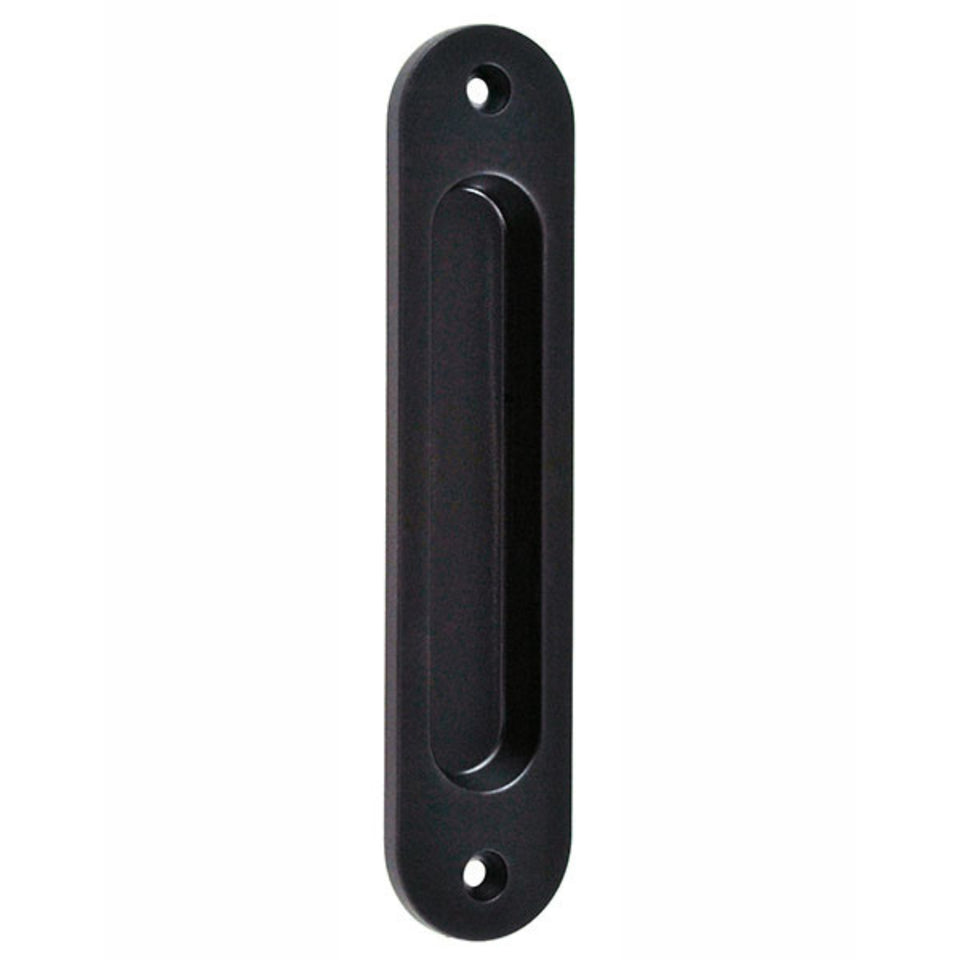
Sold out Nidus Radius Sliding Door Flush Pull Handle 135mm Matte Black
Checking delivery...$18$0 (-0%) offRRP of $18 -

Sold out Nidus Radius Sliding Door Flush Pull Handle 135mm Satin Chrome
Checking delivery...$14$0 (-0%) offRRP of $14 -

Sold out Nidus Radius Sliding Door Flush Pull Handle 135mm Polished Chrome
Checking delivery...$14$0 (-0%) offRRP of $14


Sliding Door Handles Buying Guide
A sliding door solves a genuine space problem, no swing arc to plan around, but it introduces a different hardware requirement in return: any handle needs to avoid catching on the door frame, the wall cavity, or an adjacent sliding panel as the door moves. This is why sliding door hardware looks distinctly different from a standard passage or privacy handle, even though the underlying function, giving a secure grip to open and close the door, is the same.
Why sliding doors need different hardware
A standard lever or knob relies on a spindle passing through the door to a matching handle on the other side, with enough clearance on each face for a hand to grip comfortably. A sliding door, particularly a cavity slider running inside the wall, has no room for that kind of protruding fitting. Hardware designed for this application sits recessed into, or flush against, the door's surface instead, giving a secure grip without adding any thickness that would catch on the cavity opening or an adjacent panel.
Types of sliding door handles
Flush pulls (recessed cup handles) are set into the door face itself, leaving only a shallow recess visible when not in use. These suit cavity sliding doors specifically, where the door needs to disappear fully into the wall without any part of the hardware catching on the frame.
Edge pulls are mounted on the leading edge of the door rather than its face, giving a grip point that's accessed from the side as the door is drawn open, useful where a flush pull isn't practical or preferred.
Privacy options are available for sliding doors used on bathrooms or other rooms needing to lock, generally incorporating a turn-snib or similar mechanism into the flush pull itself, since a standard protruding privacy lever isn't compatible with a cavity slider's recessed design.
Choosing a finish
Sliding door hardware is available across the same finish range as standard passage and privacy handles, chrome, matte black, brushed nickel, brushed brass and others, and matching the finish to the home's existing hardware and tapware keeps the space reading as one considered design rather than a mismatched detail.
Installation considerations
Door thickness and recess depth need to be checked carefully before ordering flush hardware, since a recessed pull needs to sit within the door's actual thickness without compromising its structural integrity. Cavity slider systems generally require the hardware to be planned before the door and cavity frame are installed, since retrofitting flush hardware into an already-hung cavity door is considerably more difficult than specifying it upfront. Barn-style track systems, by contrast, offer more flexibility after installation, since the handle is simply fixed to the door's visible face rather than recessed into it.
Completing the home
Sliding door handles are easiest to choose once a consistent hardware finish is settled across the home, since matching cavity slider pulls to nearby passage and cabinet handles keeps every room reading as one coordinated design. The Blue Space's Passage Door Handles and Cabinet Handles collections are worth reviewing alongside a sliding door handle selection to plan the full home's hardware together.

