


Showers
527 Items
-
In StockDesigner Look

Sold out Popular Choice Nero Mecca Twin Shower With Air Shower II Brushed Gold
Checking delivery...$1,991$0 (-0%) offRRP of $1,991 -
In Stock

Sold out Nero Mecca Twin Shower With Air Shower II - Brushed Nickel
Checking delivery...$1,749$0 (-0%) offRRP of $1,749 -
Lifetime Warranty

Sold out Meir Gooseneck Shower Set with 200mm Rose, Three-Function Hand Shower Chrome
Checking delivery...$1,186$0 (-0%) offRRP of $1,186 -
In StockLifetime Warranty

Sold out Meir Round 3 Function Rail Shower Lustre Bronze
Checking delivery...$811$0 (-0%) offRRP of $811 -
Lifetime Warranty

Sold out Meir Gooseneck Shower Set with 200mm Rose, Three-Function Hand Shower Champagne
Checking delivery...$1,874$0 (-0%) offRRP of $1,874 -

Sale On Now!
Up to 70% off across the store, plus free towels and mirrors up for grabs on orders over $800*
-
Lifetime Warranty

Sold out Meir Round Combination Shower Rail 300mm Rose & Hand Shower - Shadow
Checking delivery...$1,999$0 (-0%) offRRP of $1,999 -

Sold out Caroma Contura II Rail Shower with Overhead - Brushed Brass
Checking delivery...$1,391$0 (-0%) offRRP of $1,391 -
In Stock

Sold out Caroma Urbane II Rail Shower 300mm Overhead Brushed Brass
Checking delivery...$1,543$0 (-0%) offRRP of $1,543 -
In StockLifetime Warranty

Sold out Meir Round Hand Shower on Bracket - Brushed Nickel
Checking delivery...$436$0 (-0%) offRRP of $436 -

-
In StockLifetime WarrantyFamily Friendly
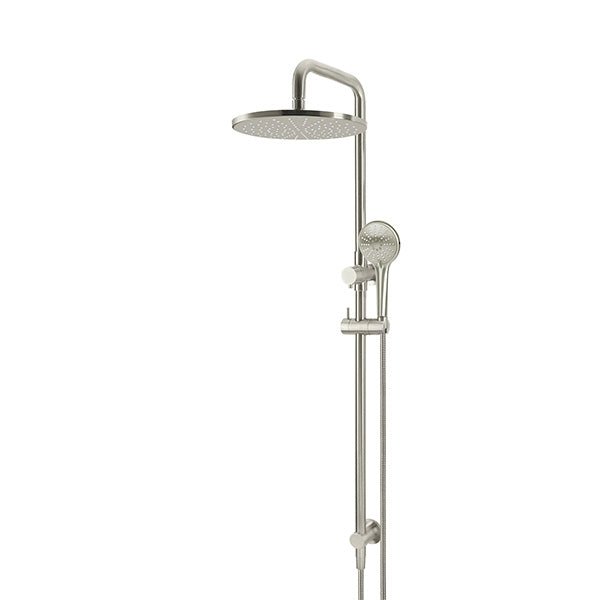
Sold out Meir Round Combination Shower Rail 300mm, 3 Function Hand Shower Brushed Nickel
Checking delivery...$1,999$0 (-0%) offRRP of $1,999 -
In StockLifetime Warranty

Sold out Meir Round Combination Shower Rail 200mm, 3 Function Hand Shower Tiger Bronze
Checking delivery...$1,749$0 (-0%) offRRP of $1,749 -
In StockLifetime Warranty

Sold out Meir Round Wall Shower Curved Arm 400mm Brushed Nickel
Checking delivery...$311$0 (-0%) offRRP of $311 -
In StockLifetime Warranty
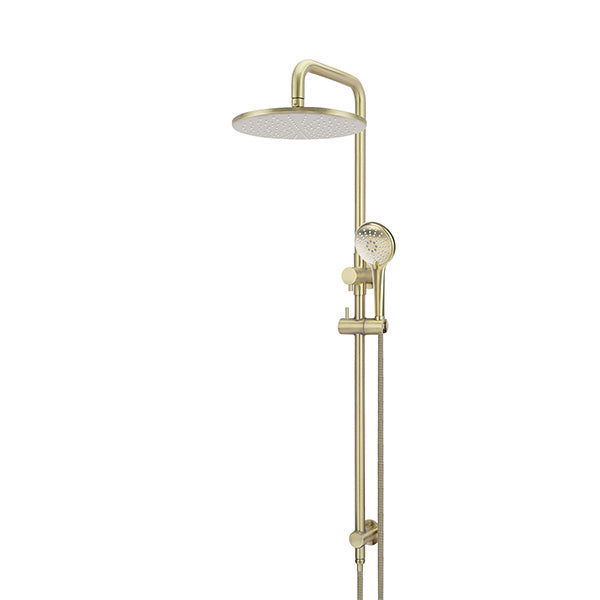
Sold out Meir Round Combination Shower Rail 300mm, 3 Function Hand Shower Tiger Bronze
Checking delivery...$1,999$0 (-0%) offRRP of $1,999 -
In StockLifetime Warranty

Sold out Meir Round Shower Rose 200mm Brushed Nickel
Checking delivery...$311$0 (-0%) offRRP of $311 -
-
In StockLifetime Warranty

Sold out Meir Round Hand Shower on Swivel Bracket Lustre Bronze
Checking delivery...$486$0 (-0%) offRRP of $486 -
In StockLifetime Warranty

Sold out Meir Round Shower Rose 300mm Lustre Bronze
Checking delivery...$624$0 (-0%) offRRP of $624 -
In StockLifetime Warranty

Sold out Meir Round Shower Rose 300mm Brushed Nickel
Checking delivery...$561$0 (-0%) offRRP of $561 -
In Stock

Sold out Nero Mecca Rail Shower With Air Shower Brushed Gold
Checking delivery...$686$0 (-0%) offRRP of $686 -
In StockLifetime Warranty

Sold out Meir Round Combination Shower Rail 300mm, 3 Function Hand Shower Champagne
Checking delivery...$1,999$0 (-0%) offRRP of $1,999 -
In StockLifetime Warranty

Sold out Meir Round Wall Shower Curved Arm 400mm Tiger Bronze
Checking delivery...$311$0 (-0%) offRRP of $311 -
In StockLifetime Warranty

Sold out Meir Round Shower Rose 200mm Tiger Bronze
Checking delivery...$311$0 (-0%) offRRP of $311 -
In StockLifetime Warranty

Sold out Meir Round Shower Rose 200mm - Champagne
Checking delivery...$311$0 (-0%) offRRP of $311 -
In StockLifetime Warranty

Sold out Meir Round Wall Shower Arm 400mm Lustre Bronze
Checking delivery...$324$0 (-0%) offRRP of $324 -

-
In StockLifetime Warranty

Sold out Meir Round 3 Function Rail Shower Brushed Nickel
Checking delivery...$774$0 (-0%) offRRP of $774 -
In Stock

Sold out Nero Mecca Rail Shower With Air Shower Brushed Nickel
Checking delivery...$538$0 (-0%) offRRP of $538 -
Lifetime Warranty

Sold out Meir Round Combination Shower Rail 200mm, 3 Function Hand Shower Brushed Nickel
Checking delivery...$1,749$0 (-0%) offRRP of $1,749 -
In StockLifetime WarrantySpa Feel

Sold out Meir Round Shower Rose 300mm Tiger Bronze
Checking delivery...$561$0 (-0%) offRRP of $561 -
In Stock

Sold out Nero Round Shower Arm 330m Length Brushed Gold
Checking delivery...$135$0 (-0%) offRRP of $135 -
In Stock

Sold out Nero Mecca Care 25mm Grab Rail and Adjustable Shower Rail Set 900mm Brushed N...
Checking delivery...$552$0 (-0%) offRRP of $552 -
In Stock

Sold out Nero Mecca Rail Shower With Air Shower Chrome
Checking delivery...$390$0 (-0%) offRRP of $390 -
Lifetime Warranty

Sold out Meir Round Combination Shower Rail 200mm, 3 Function Hand Shower Champagne
Checking delivery...$1,749$0 (-0%) offRRP of $1,749 -
In Stock

Sold out Nero Mecca Shower on Bracket With Air Shower Brushed Nickel
Checking delivery...$377$0 (-0%) offRRP of $377 -
In Stock

Sold out Nero X Plus All Direction Shower Head - Matte Black
Checking delivery...$161$0 (-0%) offRRP of $161 -
In Stock

Sold out Nero Mecca Shower on Bracket With Air Shower Brushed Gold
Checking delivery...$444$0 (-0%) offRRP of $444 -
Coastal Rated

Sold out Nero Zen SS316L Outdoor Freestanding Shower Column Brushed Nickel
Checking delivery...$3,229$0 (-0%) offRRP of $3,229 -


What a shower set is
A shower set is the visible part of a shower: the head, the arm or ceiling dropper that carries it, and usually a hand shower, a hose and a rail or holder. It is not the controls. The mixer or tap set that turns the water on and sets the temperature is a separate part, and it is the first thing to check, because several kinds of set are sold without one. This is the starting point for the whole shower range. The page covers how a working shower is put together, how to choose by pressure and by who uses it, and where to go for each type.
A set is a shower head and matching wall-mount tapware, and in some sets an adjustable rail, a bath spout or an integrated mixer. The contents vary by set, so the box contents are the source of truth.
The parts of a working shower
Most confusion about shower sets is confusion about parts. Here they are in plain terms.
- The shower arm connects the head to a wall outlet. A ceiling dropper does the same job from above, and droppers are sold in lengths such as 300 mm and 600 mm.
- The head itself: a fixed head on the arm, or a larger overhead head.
- The hand shower, which attaches to a hose. The hose is required whenever you buy a hand shower.
- The BP, the water outlet fitting the hose connects to. A holder with a BP both holds the hand shower and brings the water to the hose.
- The rail, which mounts to the wall, holds the hand shower and lets you change its height and angle.
- The diverter, which switches the water between two outlets, such as an overhead head and a hand shower. A rail set carries its own.
- The mixer or tap set, which controls temperature and flow. It is required to run any set and is not included with a rail set.
Three ways to build a shower
There are three builds, from simplest to most flexible.
The first is minimal: an arm, a head and a mixer, with no hose and no hand shower. It suits a small shower where practicality matters most, and the arm is either a ceiling dropper or a wall arm, chosen by ceiling height and by the plumbing inside the wall. The second uses twin taps in place of the mixer, one hot and one cold, so you set the temperature by turning both. The third is the diverter build, which uses an arm, a head, a hand shower, a hose, a BP, a mixer with a diverter and a holder. The holder is either a clip or a wall hose connector, and the connector can also act as the BP, so no separate one is needed.
Other all-in-one sets package the parts differently. A rail set holds a rain head and a hand shower and carries its own diverter, so only the mixer is bought separately. A double shower can use two heads, two arms or droppers and either two mixers, a double tap set or two rail sets. A hand shower paired with an overhead head needs an additional mixer or a diverter to work, or two separate mixers.
Check your pressure before you choose
Pressure decides which types perform, and it is quick to test. Turn on the shower and see if it fills a 1 litre jug in 6 seconds or less, or fill a 10 litre bucket from the shower outlet in under 60 seconds. Both come to about 10 litres a minute, which is good pressure. Too little gives a weak dribble, and too much can throw water out of the shower.
Pressure then sorts the heads. Large overhead heads of 200 mm and more suit high pressure, and heads under 200 mm suit low pressure. Hand showers with smaller nozzles or pressure-boosting technology, compact twin sets and smaller overhead heads suit low-pressure homes, which are common in older houses and apartments with gravity-fed systems. High-pressure homes, with a strong mains supply or a booster pump, suit large rain heads, dual sets and fixed heads. Showers across the range are rated for an operating pressure of 150 to 500 kPa, so measure that against your own supply.
Plan the room around the shower
A shower is part of a system, and a few things need settling first. Your water source matters. Ceiling height matters too, because bulkheads, common in apartments, can lower it, so check that the head and the dropper will fit. If you want two showers running at once, check whether the hot water system can serve both, since running two without a loss of pressure may need more pipes from the hot water unit. Check that the drainage is enough for the flow, and check the screen size, because a single-panel screen can be too short and a door may be better.
Heights and measurements for a shower set
The heights below apply to most showers. A fixed head sits at 2000 to 2100 mm above the finished floor, measured to the centre of the arm outlet. A rain head on a ceiling arm sits at 2100 to 2200 mm depending on ceiling height. For a rail, set the top at 1800 to 1900 mm. The bottom of the rail sits at about 1000 to 1100 mm, with the holder reaching about 1800 mm. A wall mixer sits at 1000 to 1100 mm from the floor, centred in the shower space. A wall arm projects 300 to 400 mm and a ceiling arm ranges from 100 to 600 mm, and a ceiling arm that is too short puts a large head uncomfortably close to the wall.
Which type of shower suits you
Each shower type suits a different user, and each has its own collection. Use this as a map.
- A fixed head that is low maintenance and easy to clean: shower roses.
- A larger overhead head for a soft, full-body spray in a main bathroom or master suite: rain showers.
- A head that drops from above for a clean ceiling line: ceiling showers.
- A detachable head that you aim, suited to families, pets and mobility needs: hand held shower heads.
- A hand shower on a sliding bar for households with different heights: shower rails.
- A fixed overhead plus a hand shower, to switch between them or run both: twin shower heads, or compact twin showers for ensuites, apartments and smaller recesses.
- Replacement or extension arms: shower arms.
- A shower for the garden, pool or coast: outdoor showers.
Water efficiency and certification
Every shower head sold in Australia should carry WaterMark certification and a WELS rating. The WELS label shows a star rating and a tested flow in litres a minute. For showers, 3 star is the baseline and ratings go up to 5 star. The flows are 9 litres a minute at 3 star, 7.5 at 4 star and 6 at 5 star. The range shows 3, 4 and 5 star ratings, and each model has its own figure.
Finishes, and matching them
The range comes in chrome, brushed nickel, black, gold, brass, gunmetal, bronze, champagne and white, and in brass, stainless steel, 316 grade stainless steel and ABS. Match the finish to the mixer and the rest of the bathroom. Match the shower's finish to the toilet fittings, basin mixer, towel rails and accessories, and keep to one finish family. Chrome is widely available and easy to match. Matte black hides fingerprints and water spots but shows scratches, and brushed finishes hide spots well. Gold and gunmetal tones vary between manufacturers, so check them under the room's light.
Browse by finish: chrome showers, black showers, brushed nickel showers, brushed brass showers, gold showers, bronze showers, gunmetal showers, champagne showers, white showers and stainless steel showers. For the controls, see shower mixers.
Fitting and replacing a shower set
A like-for-like swap of a head on the same arm is a small job. Loosen the old head by hand, turning counterclockwise, and clean the thread. Wrap fresh thread seal tape three or four times, hand-tighten the new head and check the joint for drips. Most heads and arms use a 1/2 inch BSP connection, but imported products can differ, so confirm the thread before you buy. Changing the arm, the mixer or the plumbing points needs a licensed plumber, and so does anything that moves an outlet or runs new pipework. Ceiling-mounted units usually need professional installation as well.
When a set includes a hand shower, fit the hose with a washer at each end and hand-tighten both. Dock the handset in its bracket, turn the water on, and check every joint. On a dual system test both outlets. If a joint drips, remove the part, reapply the tape and check the washer is seated. Parts can often be replaced individually, so confirm compatibility for a proper fit.
Looking after a shower set
Wipe the head after use and rub silicone nozzles with a finger every few weeks to lift early scale. Limescale is the usual cause of weak or uneven spray. For a deeper clean, soak the head in warm water with a few drops of mild dishwashing liquid for 30 to 60 minutes, scrub with a soft toothbrush and rinse. On PVD and special finishes such as matte black, brushed gold, brushed nickel and gunmetal, avoid vinegar, baking soda, acid descalers and abrasive pads, because acid attacks the coating. The safe default is warm soapy water. Inspect hoses, joints and connections every few months. Tighten them by hand and replace a cracked washer or O-ring.
Shower sets by brand
If your tapware is from one range, start from that brand's showers: Phoenix showers, Nero showers, Caroma showers, Meir showers, Fienza showers, Modern National showers, Clark showers and Indigo showers. Keeping to one range keeps the finish consistent across the head, the rail, the mixer and the accessories.

