


Compact Twin Showers
11 Items
-
In Stock

Sold out Caroma Urbane II Compact Twin Shower Chrome
Checking delivery...$758$0 (-0%) offRRP of $758 -
In Stock

Sold out Caroma Urbane II Compact Twin Shower Brushed Brass
Checking delivery...$986$0 (-0%) offRRP of $986 -
In Stock

Sold out Caroma Urbane II Compact Twin Shower Matte Black
Checking delivery...$834$0 (-0%) offRRP of $834 -

Sold out Caroma Urbane II Compact Twin Shower Brushed Nickel
Checking delivery...$986$0 (-0%) offRRP of $986 -
In Stock

Sold out Caroma Urbane II Compact Twin Shower Gunmetal
Checking delivery...$986$0 (-0%) offRRP of $986 -

Sale On Now!
Up to 70% off across the store, plus free towels and mirrors up for grabs on orders over $800*
-
In Stock
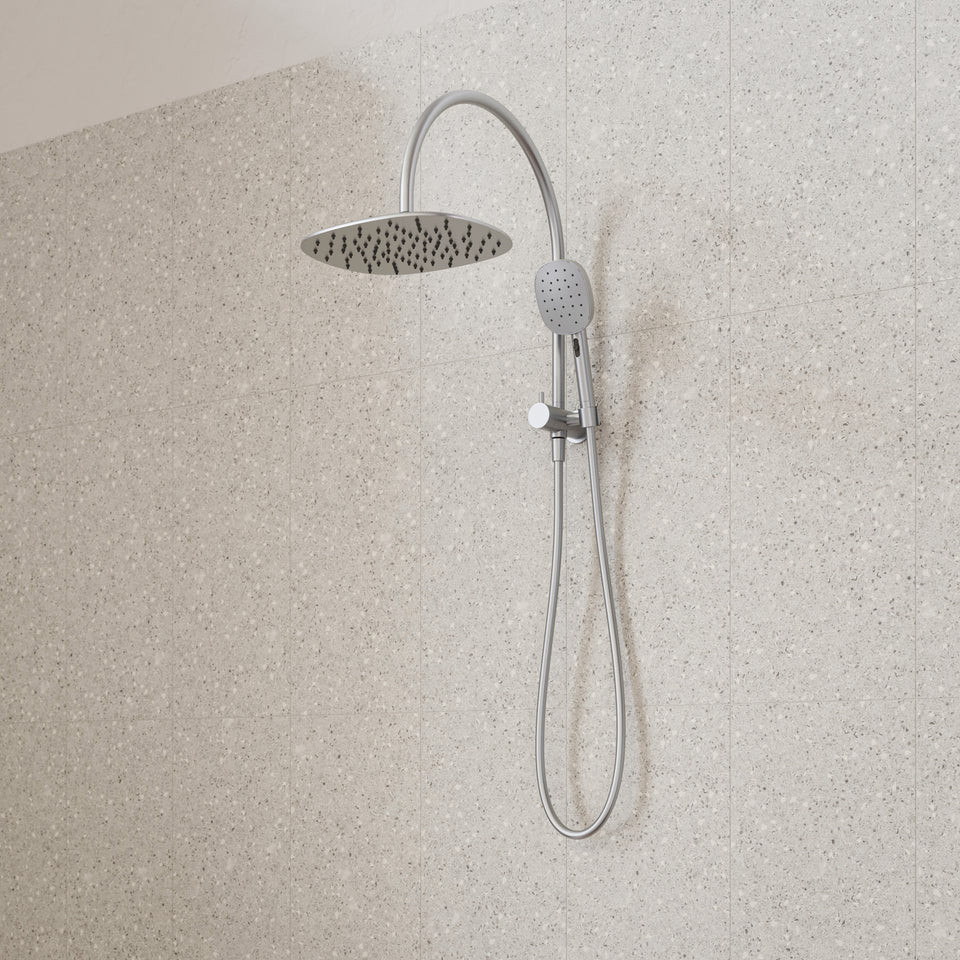
Sold out Caroma Contura II Compact Twin Shower - Brushed Nickel
Checking delivery...$1,301$0 (-0%) offRRP of $1,301 -
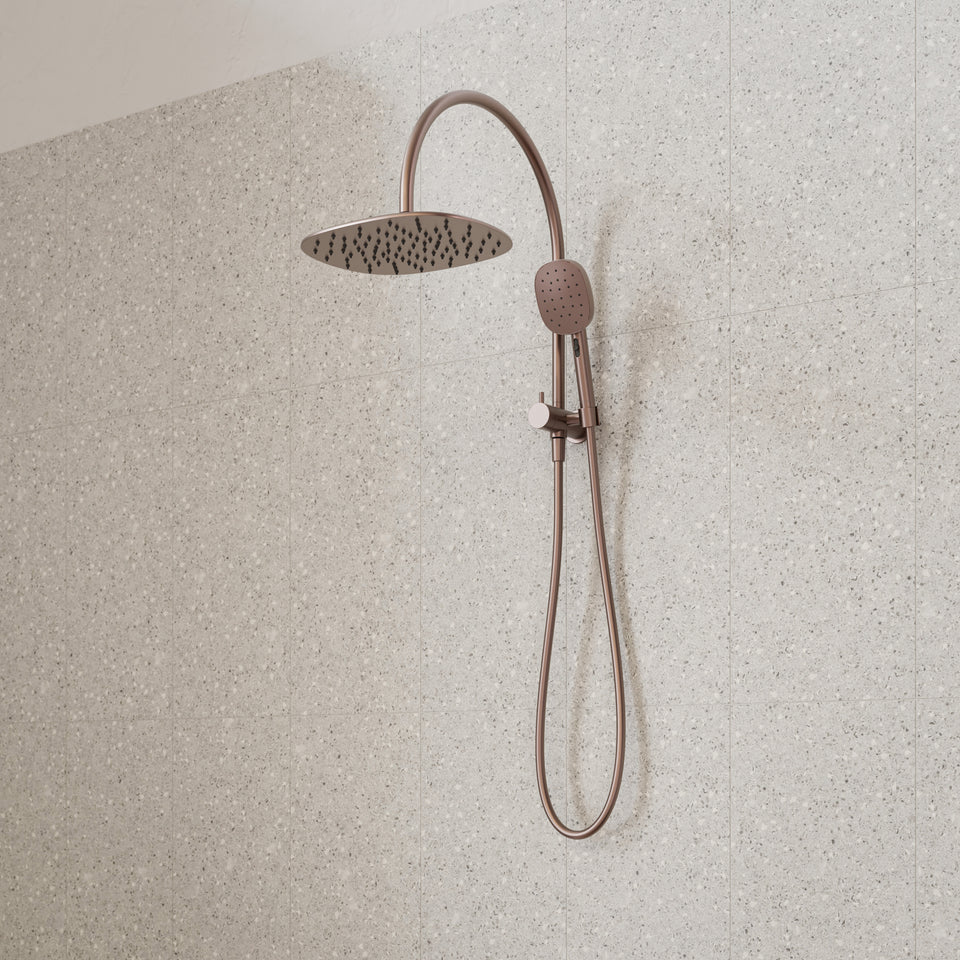
Sold out Caroma Contura II Compact Twin Shower - Brushed Bronze
Checking delivery...$1,301$0 (-0%) offRRP of $1,301 -
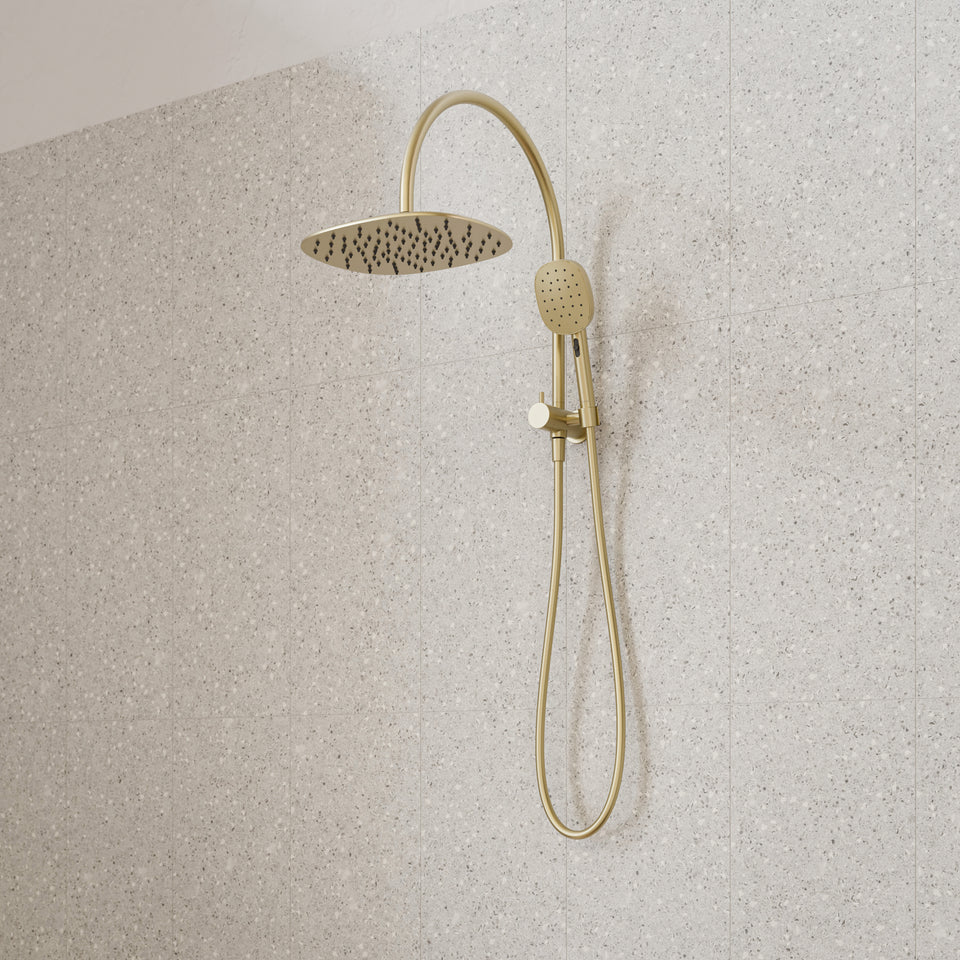
Sold out Caroma Contura II Compact Twin Shower - Brushed Brass
Checking delivery...$1,301$0 (-0%) offRRP of $1,301 -
In Stock
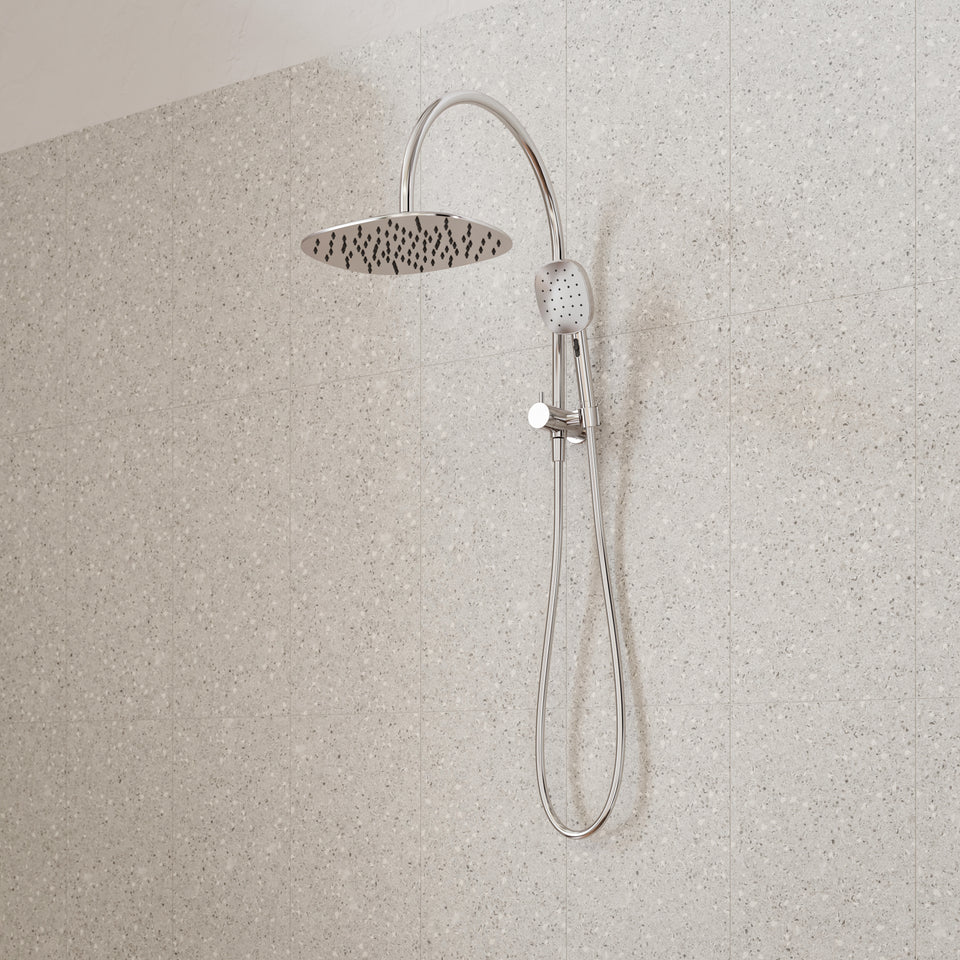
Sold out Caroma Contura II Compact Twin Shower - Chrome
Checking delivery...$1,004$0 (-0%) offRRP of $1,004 -
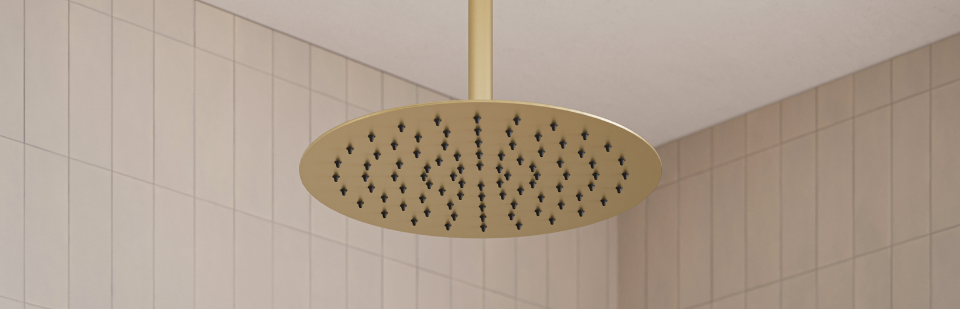
-
$268 Off RRP

Sold out Nero Mecca 2 in 1 Twin Shower Gun Metal
Checking delivery...$798$268 (-25%) OFFRRP of $1,066$268 (-25%) offRRP of $1,066 -
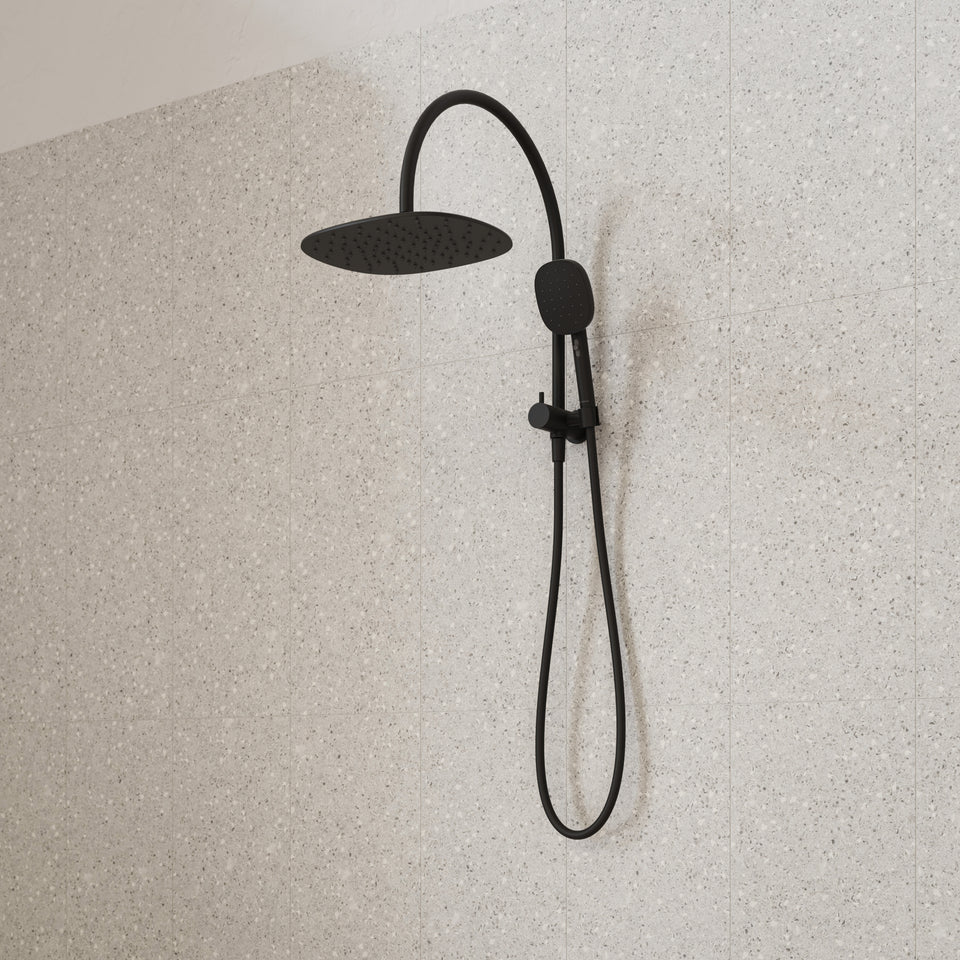
Sold out Caroma Contura II Compact Twin Shower - Black
Checking delivery...$1,105$0 (-0%) offRRP of $1,105


What a compact twin shower is
A compact twin shower puts a fixed overhead head and a handset on one short rail. The rail is about 314 to 316 mm long, against the 650 mm and longer rails of a full twin rail set, and a built-in diverter switches the water between the two. It also goes by short twin shower, dual shower head, double shower head, twin head shower and 2 in 1. It is a short twin shower with an in-built water delivery point and handset holder, so it needs no separate wall elbow.
Both outlets sit close to the wall, which is why the set suits a small recess. You get a rain-style wash from the overhead and a focused spray from the handset without a long rail taking up wall space. The range here is the compact sets. For the whole family of twin sets, including full-length rails and sets with a separate overhead, see twin shower heads. The full range sits in showers.
Is a compact twin a good idea?
For one or two people in a modest shower, yes. You keep your hair dry on some days and take a full-body shower on others. The handset rinses the shower, bathes children and suits people with limited mobility. A compact set keeps that choice without needing the wall width of a full rail. Dual heads take more room than a single head and have more connections, and a hose and its joints are the places to inspect now and then.
The call depends on your recess. If it is at least about 900 mm square and you want both an overhead and a handset, a compact twin is a sound choice. If the shower is wider and you want to adjust the handset height, a full rail set gives you more. If you only want a handset, a bracket or a rail alone is simpler.
How small can a double shower be?
Two sizes come up. For the shower itself, 900 x 900 mm is the standard residential minimum, with 1000 x 1000 mm as the comfortable size for one person, which is noticeably better than 900 mm. The 900 mm minimum passes code but is not necessarily comfortable, and most small bathrooms of 4 to 6 square metres can fit a 1000 mm shower. Allow at least 600 mm of clearance in front of the shower, and confirm the minimum with your builder.
For two people showering together, 1600 mm wide is the minimum. A compact twin is not a two-person shower. It is one person with two outlets, and it is built so the whole set fits a recess of about 900 to 1000 mm. A shower smaller than about 900 x 900 mm may suit a single handheld better than a twin, and a single user needs about 1000 x 1000 mm for a rail set. So the short rail is the right tool when the recess is on the small side of that range.
The ranges in this collection
Caroma Urbane II, Contura II, Liano II and Riviere
Caroma makes the largest group. The Urbane II compact twin has a 300 mm overhead rain shower and a VJet handset whose spray varies from firm to soft, a 314 mm rail, an integrated diverter, a smooth silverflex hose and flow regulators that keep the flow consistent across pressures. Its overhead is rated 3 star at 9 litres per minute, and the handset is 4 star at 7.5. The top inlet makes it a straightforward retrofit where an old shower comes off the wall. The Contura II compact twin has a 250 mm head and a rail with a slide, rated 4 star at 7.5 litres per minute on both outlets, with dual check valves in the hand shower. The Liano II compact twin pairs a 300 mm rain shower on a gooseneck arm with a three-function hand shower, rated 3 star at 9 litres per minute, with an overall height of 464 mm. The Riviere compact twin keeps an overhead and a rail-mounted handshower on one frame, rated 4 star at 7.5 litres per minute on both. See Caroma showers.
Phoenix Vivid Slimline, Vivid MKII, Ormond and Lexi
The Vivid Slimline compact twin is a dual head set with a quality chrome plate finish, an integrated diverter and a top inlet that fits existing half inch plumbing with drill-free installation, rated 5 star at 6 litres per minute. The Vivid MKII compact twin brings a 250 mm overhead and a handpiece into one wall set, with an overall height of 461 mm and a 363 mm arm reach, rated 4 star. The Ormond compact twin has a 250 mm overhead with LuxeXP spray technology, a three-function push-button handpiece, dual check valves and a 376 mm reach, rated 4 star at 7.5 litres per minute. The Lexi compact twin follows the angular Lexi style. See Phoenix showers.
Nero Mecca 2 in 1
The Mecca 2 in 1 twin has a 250 mm durable metal head, a 1.5 m smooth PVC hose and a three-function hand shower, with easy retrofit installation. Its overhead is rated 3 star at 9 litres per minute and the hand shower has no star rating. See Nero Tapware showers.
Installing without re-plumbing
Most compact twins are made for a swap. They have a top inlet that fits an existing half inch plumbing connection, a built-in diverter, a drill-free installation and fixing points that line up with the old holes. Some short twins are a screw-off, screw-on fit with no drilling. Check three things before you order: the inlet position, the fixing distance of the set and the reach of the arm against the wall. A rail needs a solid wall fixing and proper sealing to avoid leaks behind tiles, so check what is behind the tile first.
Can both heads run at the same time?
It depends on the diverter. The overhead and the handheld share one water outlet, and the diverter sends the flow to one head or, on some models, both. A two-way diverter runs one head at a time and keeps pressure higher in each. A three-way diverter allows both at once, but each head feels weaker. The compact twins here use a built-in diverter that switches between the overhead and the handset, so you use one at a time. That suits a small set, because all of the supply goes to the head you are using.
Pressure is the other limit. Low pressure is the main limitation of dual setups, and galvanised pipes, upper-storey bathrooms and long pipe runs often have lower pressure. Most compact twins here state an operating pressure of 150 to 500 kPa. A simple check at home is the bucket test. A 10 litre bucket that fills in under 60 seconds under the shower points to good pressure, and large overhead rain heads suit supplies above about 200 kPa.
Size of the overhead
Round fixed heads run at 200 to 300 mm, with 150 to 200 mm for low-pressure systems and 250 or 300 mm for rain heads. A 200 mm head fits a 900 x 900 mm shower without much overspray and a 250 mm head is the common renovation choice. A 300 mm head needs good pressure and a wide shower zone, because much of the spray misses you in a small shower. The overheads here are 250 and 300 mm. In a recess at the small end of the range, the 250 mm sets are the safer fit, and the 300 mm sets suit a 1000 mm shower with good pressure. A larger face spreads the same flow across more nozzles, so the streams are gentler, not stronger.
Compact twin or rail shower
The two are close cousins, and the choice comes down to what you need to move. A rail suits compact bathrooms, ensuites, people of different heights, young children and easy cleaning, while a twin suits people who want overhead comfort plus a handheld, with more components to clean. A compact twin sits between them. It has the overhead of a twin and the short footprint of a small set, but the handset sits on a short rail, so the height range is small. If the household has a wide range of heights or young children who need the handset low, a full rail with a long slider gives more. If the household is one or two adults, a compact twin is enough. For the rail guide, see shower on rails.
Heights
Set a fixed wall head at 2000 to 2100 mm above the finished floor to the centre of the arm outlet, and 2100 to 2200 mm for a tall household. The top of a rail sits at about 1800 to 1900 mm, and a wall mixer goes at 1000 to 1100 mm. The compact twins list overall heights of 461 to 495 mm, so the overhead lands near the top of that range once the set is fixed. Confirm the heights at rough-in, before tiling, and give the plumber both outlet heights if you are fitting a diverter set.
Valves, hoses and care
A handset on a hose creates a backflow risk, so check the valve. The Contura II lists dual check valves in the hand shower, the Ormond lists AS 2845.1 compliant dual check valves and the Mecca lists a built-in check valve. The hose takes the most daily handling, so inspect it now and then. For care, use warm water, mild soap and a soft cloth, then rinse and dry. Keep abrasives and strong chemicals away from the finish, and check the care line before using vinegar on a coated finish. Rubber and silicone nozzles rub clean with a finger.
Finishes
The finishes include chrome, brushed nickel, brushed brass, brushed bronze, gunmetal, matte black and gold, with PVD on many of the metallic colours. For finish-led browsing, see chrome showers, brushed nickel showers, black showers, gunmetal showers, bronze showers and brushed brass showers.

