


Door Stops
4 Items
-

Sold out Nidus Wall Mounted Door Stop Gun Metal Grey
Checking delivery...$18 -
$3 Off RRP

Sold out Nidus Wall Mounted Door Stop Satin Brass
Checking delivery...$15$3 (-16%) OFFRRP of $18 -
$3 Off RRP

Sold out Nidus Wall Mounted Door Stop Matte Black
Checking delivery...$15$3 (-16%) OFFRRP of $18 -
In Stock
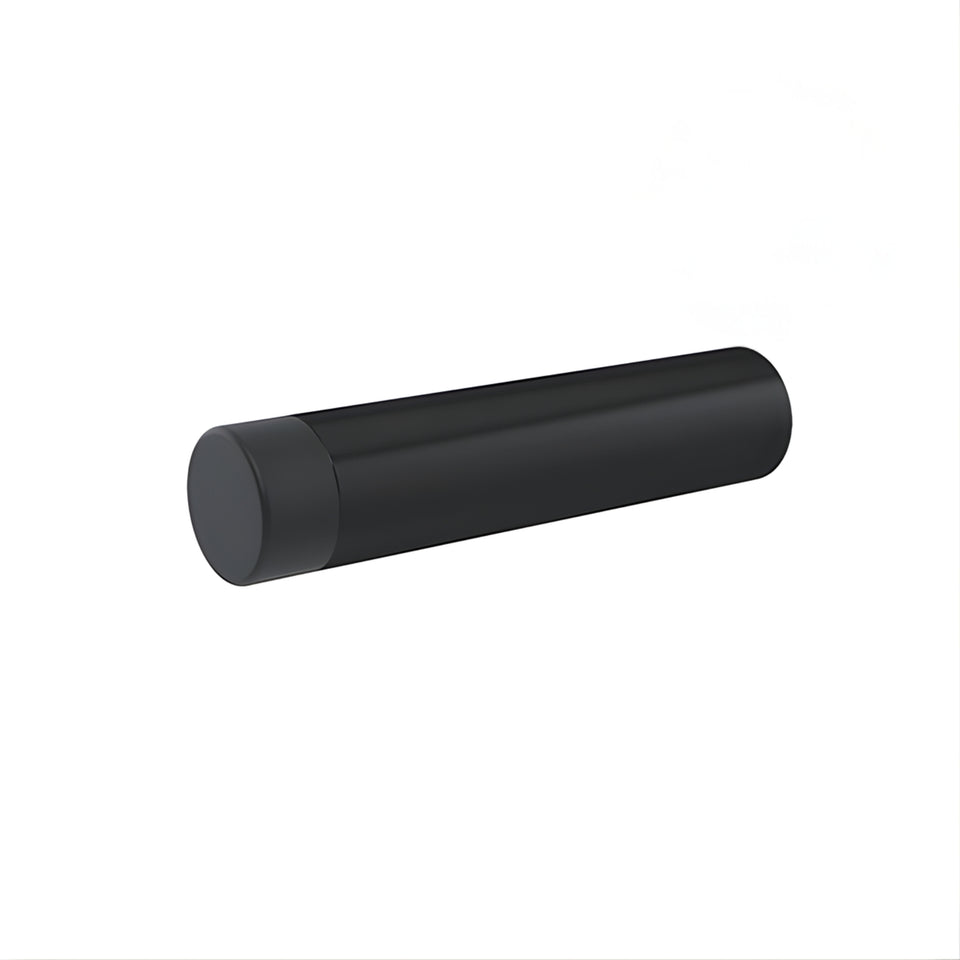
Sold out Meir Round Door Stop Matte Black
Checking delivery...$23


Door stops buying guide
A door stop stops the door, or its handle, before it hits something. The fittings in this collection fix to the wall, the skirting or the floor, and a few also hold the door open. They differ in where they mount, how far they project, what they are made of and what comes in the box. Below are the main types, which product pages fit which job, and how to place a stop so that it takes the first knock. Door stops are chosen with the rest of the door hardware, and the full range is on door hardware.
Where a stop has to sit
A stop only works if it meets the door at the right point. The method is simple: open the door slowly and mark the first point of impact, which is usually the handle, then put the stop there. For a baseboard stop, it advises angling the rubber tip so it meets the door before the handle does. A wall bumper goes at handle height, and it needs a stud or proper drywall anchors for a firm mount. A floor stop goes where the handle would otherwise hit, with clearance left for cleaning.
These are the mistakes that matter. One is placing a stop away from the actual impact point. Others are fitting a floor stop on carpet, where it will not mount firmly, drilling marble or ceramic without the right bit, and mounting a wall bumper without a stud or proper anchors. The floor and the wall decide which fittings are possible, so check them first.
Wall mounted door stops
A wall mounted stop cushions the wall at the point where the handle strikes. The Lockwood A300 is a stainless steel body with a rubber buffer, 75mm long and 19mm in diameter, with concealed fixing behind the buffer and a mounting screw in the box. The Lockwood A280 is a round stop with a stainless steel body and rubber buffer in the same family. The Lockwood Vivid wall mounted stop lists a 304 stainless steel body with a rubber buffer, 19mm diameter and 75mm height, in satin bronze. The Meir round door stop is stainless steel with a rubber tip, 84mm long and 19mm wide, in a PVD finish. The Nidus wall mounted door stop has a rubber bumper, an overall height of 80mm and a 44mm base diameter, in gun metal grey. The Iver pencil door stop is brass with a lacquered finish, 75mm long and 17mm wide.
The Momo Handles wall stops come in brass at 65mm and 85mm, and the Momo Handles Brooklyn wall stop is zinc alloy and projects 104mm. A longer projection reaches a handle that sits further from the wall, so match the projection to where the handle ends up when the door opens. It looks like a floor stop but mounts on the wall, so confirm the mounting on the product before you order.
Skirting level stops
A stop at skirting height suits a doorway where a wall stop cannot be set high enough to meet the handle. The Zanda round skirting fix door stop is made for tight hallways, short swing arcs and doors where the handle path comes close to the skirting and not to the wall surface. It is 85mm long, and it sits low enough to stay discreet while protecting the door, the wall and the skirting. The Zanda skirting fix in brushed nickel is a zinc alloy, wall mounted stop. For a baseboard stop, mount it at the handle's impact point on the baseboard, and angle the rubber tip so it meets the door before the handle.
Floor mounted and dome stops
A floor stop sits in the path of the door and stops it before it reaches the wall. Floor stops give a secure stop for heavy or frequently used doors and suit places where a wall stop is not possible, and dome stops are low-profile fittings for interior doors in small rooms. Round Tower Hardware lists floor mounted stops for heavy doors, bathrooms and tiled or decorative walls where a wall fitting would be a problem.
The stops come in several shapes. The TradCo domed door stop is brass, 50mm long and 30mm wide. The TradCo oval door stop is brass with a 29mm projection, and matching oval spacers are available separately to adjust the height to suit the door and skirting. The Zanda floor mounted door stop is zinc alloy, 38 by 38mm. The Momo Handles Luv door stop is floor mounted with a 35.1mm projection, and the Momo Handles Casey is stainless steel with a 47mm projection. The Momo Handles Brooklyn floor stop is zinc alloy with a 34mm projection and a 62mm length, and the Momo Handles Luv timber stop comes in oak and walnut. Check the floor first: tiled floors need the right bit, and carpet will not hold a floor stop firmly.
Half moon stops
A half moon stop is a low, rounded fitting, usually fixed to the floor beside the wall. The Lockwood A290 and A292 are zinc half moon stops in brushed satin chrome, and the A290 lists a rubber buffer. The Lockwood Vivid half moon stop lists a 304 stainless steel body with a rubber buffer, a 46mm diameter and a 27mm height. The Meir round half moon stop is zinc die-cast, 45mm in diameter and 25mm high, with a 6.5mm mounting hole. Low-profile floor stops suit doors that open towards a wall.
Magnetic stops that hold the door open
A magnetic stop holds the door open as well as stopping it. Magnetic stops suit drafty spaces, doors near windows and doors that drift shut on uneven floors. The Zanda magnetic door stop 75mm is zinc alloy, 50mm long and 25mm wide, and can be mounted to the floor or the wall. The Zanda magnetic door stop in 316 stainless steel is floor mounted, 60mm long and 35mm wide. The TradCo magnetic door stop is brass, wall mounted, with a 75mm projection, and a separate keeper fixes to the door and meets the stop. A magnetic stop suits most internal or external swinging doors to keep the handle off the wall, provided the clearance is right.
A magnetic stop works as a pair. Round Tower Hardware describes the system as a magnet on the floor or wall and a plate on the door, and a separate keeper fixes to the door and meets the stop. Order and fit both parts.
Bathrooms and tiled floors
Bathroom doors are a common reason to look for a door stop, and they are often the hardest to fit, because the floor is tiled and the wall behind the door may carry a vanity or a toilet. Round Tower Hardware lists floor mounted stops for bathrooms and for tiled or decorative walls. Drilling marble or ceramic without the right bit and care is a mistake, so plan the fixing before you start. A wall stop is the alternative where the floor is tiled, but it needs a stud or a proper anchor behind the tiles. Hinge pin stops limit the swing near toilets, vanities and cabinets, but those are not in this collection.
The handle style matters too. A lever projects further than a knob, so it meets the wall earlier. Measure the handle's reach on the door you have, and use the projection on the product page to choose the stop. Privacy handles for bathroom doors are on privacy door handles.
Holding a door open without a fitting
People often ask what to use in place of a dedicated door stop. A portable rubber wedge slides under the door and holds it temporarily. It does not stop a handle hitting a wall, and it does nothing to protect the wall or the skirting. For a door that is held open often, a fitted magnetic stop is the permanent version. For a door that only needs to be kept off a wall, a wall, skirting or floor stop does the job, and the choice depends on the surface behind the door.
Choosing by the door
Four questions decide the choice. How heavy is the door? Heavier doors call for solid or floor stops. How is the door used? A door that needs to stay open calls for a magnetic or kick-down stop. Where does it open? A door that opens near walls or furniture calls for a wall stop. How much swing space is there? Limited space points to a hinge pin stop, and a door that swings fully against a wall points to a wall stop. This collection does not hold hinge pin or kick-down stops, so those two are not covered here, and hinge parts are on hinges.
Materials and what is in the box
The materials in the product pages are brass, stainless steel, zinc alloy, zinc die-cast, cast brass and timber. The TradCo and Iver stops are brass with a lacquered finish, so they only need wiping. The Lockwood A250, A280, A300 and Vivid stops use stainless steel bodies with rubber buffers, and the Lockwood A350 is zinc with a rubber buffer. The Meir stainless stops use a PVD finish.
The box contents vary. The Meir round door stop lists the stop alone, and so does the Nidus wall mounted stop, so check that you have the screws and fixings your wall or floor needs. The TradCo oval spacers are sold separately. For care, use a soft damp cloth and avoid abrasive or acidic cleaners, and only wipe lacquered brass.
Matching the finish
Choose hinges, door stops and cabinet handles at the same time as the handles. The finishes need not match exactly, but they should coordinate. The finishes in this collection follow the handle finishes: brushed nickel, matte black, satin brass, brass, bronze, chrome, gunmetal, white and stainless steel. Chrome shows fingerprints and water spots more readily than brushed finishes, and matte black can look too dark in a low-light room, so pick a finish for the room it will sit in.
Where the brands sit
The stops come from several brands, each with its own page. Zanda, TradCo, Iver, Nidus and Momo Handles have door hardware pages that match their stops to their handles, and Lockwood and Lane have lever pages for the matching handles. For the handle the stop protects, see door handles and interior door handles, and for matching cupboard hardware see cabinet handles.
A door-by-door check
For each door, note where the handle strikes, the floor type, the wall behind it and whether the door should stay open. Decide the type from that, then the finish from the handles on the door, and count the fixings. A stop that sits in the wrong place protects nothing, so mark the first impact point before you buy.
The finishes on this page include brushed nickel, antique brass, polished brass, satin chrome, matte black, antique copper, ember bronze and white, so most hardware colours have a stop to match. A skirting fix stop mounts on the skirting board, a wall mounted stop on the wall and a floor mounted stop on the floor, so pick the type that matches the surface nearest to where the handle lands.
Questions about door stops
What does a door stop do?
It stops a hinged door hitting a wall, trim, furniture or a fixture. The right type depends on the job: stopping impact, limiting the swing or holding the door open. Wall and floor types stop contact, a hinge pin type limits the angle, and a magnetic type holds the door open in a set position.
What can I use instead of a door stop?
A wedge slides under the door and uses friction to resist movement, with no installation. It grips poorly on smooth floors, and it is a temporary fix. Heavier doors and busy areas do better with a fixed stop than with a portable one. The collection holds fixed types: wall mounted, skirting level, floor mounted and dome, half moon and magnetic.
Where should a door stop go?
Open the door slowly and mark the first point of impact. That mark decides the position. A wall mounted stop goes where the handle would otherwise meet the wall. Allow roughly 50 to 100mm of stopping distance in many setups. A rubber contact point improves grip and helps reduce marking on floors, walls and trim.
Will a door stop fix a sagging door?
No. A stop does not correct alignment. Do not use a stop to compensate for a door that sags or does not line up. Deal with the hinges separately.
Magnetic stops that fail to hold
If a magnetic stop does not hold the door open, check the weight of the door and any draught in the room. Magnetic holds need caution in drafty areas. The Zanda magnetic stop is 75mm and mounts on the floor or wall, the Zanda 316 magnetic stop is floor mounted, and the TradCo magnetic stop is wall mounted with a separate keeper that fixes to the door.
Hinge pin stops
A hinge pin stop limits how far the door opens by restricting the hinge. It suits a door with no suitable wall or floor contact point. The guidance is not to use one on an unusually heavy door. This collection does not list hinge pin stops, so the types above are the ones to compare.
Floors, boxes and materials
A floor stop will not mount firmly on carpet, and tile or marble needs the right drill bit and care, so check the floor before you choose a floor mounted stop. A wall stop needs a stud or proper anchors at handle height. Leave clearance for cleaning around a floor stop, and make sure it sits where the door meets it before the handle can reach the wall. A stop in the wrong place does nothing, so mark the point of first impact before you drill.
The boxes differ. The TradCo and Zanda stops include a fixing kit and instructions, the Meir and Nidus stops come on their own, and the TradCo oval stop needs oval spacers, which are sold separately. Read the box line so that the fixings are not left out, and check that the screw suits the wall or floor you are fixing into.
The materials are brass, which is lacquered on the TradCo and Iver stops, stainless steel on the Lockwood, Meir and Momo Handles Casey stops, zinc alloy on the Zanda and Momo Handles Brooklyn stops, and timber on the Momo Handles Luv. Match the finish to the hinges and handles on the same door.
Plan the position of every stop before you fix any of them. Open the door fully, mark where the handle would meet the wall, and decide whether a floor, wall or skirting stop reaches that point. Check what is behind the surface, because a screw into a hollow wall or a thin skirting will not hold. If the surface is plasterboard, fix into a stud or use a proper wall anchor, and keep the stop clear of power points and switches.

