


Passage Door Handles
18 Items
-
Italian Made

Sold out Manital Imola Passage Door Handle Set Satin Chrome
Checking delivery...$120 -
$19 Off RRP

Sold out Nidus Knurled Domici Passage Handle Satin Brass
Checking delivery...$89$19 (-17%) OFFRRP of $108 -
Italian Made

Sold out Manital Erica Passage Door Handle Set Polished Brass
Checking delivery...$156 -
Italian Made

Sold out Manital Ratio Passage Door Handle Set Satin Brass
Checking delivery...$301 -

Sold out Nidus Mediterranean Metro Passage Door Handle Set Satin Chrome
Checking delivery...$93 -

Sale On Now!
Up to 70% off across the store, plus free towels and mirrors up for grabs on orders over $800*
-
Italian Made

Sold out Manital Imola Privacy Door Handle Set Polished Chrome
Checking delivery...$176 -
Italian Made

Sold out Manital Amleto Passage Door Handle Set Satin Nickel
Checking delivery...$335 -
Italian Made

Sold out Manital GoGo Passage Door Handle Set Satin Brass
Checking delivery...$240 -
Italian Made

Sold out Manital Blade Passage Door Handle Set Satin Brass
Checking delivery...$309 -

-

Sold out Nidus Knurled Domici Passage Handle Gun Metal Grey
Checking delivery...$108 -
Italian Made

Sold out Manital Tosca Passage Door Handle Set Polished Brass
Checking delivery...$120 -
Italian Made

Sold out Manital Tosca Passage Door Handle Set Polished Chrome
Checking delivery...$120 -
Italian Made

Sold out Manital Imola Passage Door Handle Set Polished Brass
Checking delivery...$120 -
Italian Made

Sold out Manital Imola Passage Door Handle Set Polished Chrome
Checking delivery...$120 -
-
In Stock

Sold out Nidus Knurled Domici Passage Handle Matte Black
Checking delivery...$108 -
Italian Made

Sold out Manital Ratio Passage Door Handle Set Satin Chrome
Checking delivery...$251 -

Sold out Nidus Mediterranean Altro Passage Door Handle Set Matte Black
Checking delivery...$108 -
$60 Off RRPNew Release
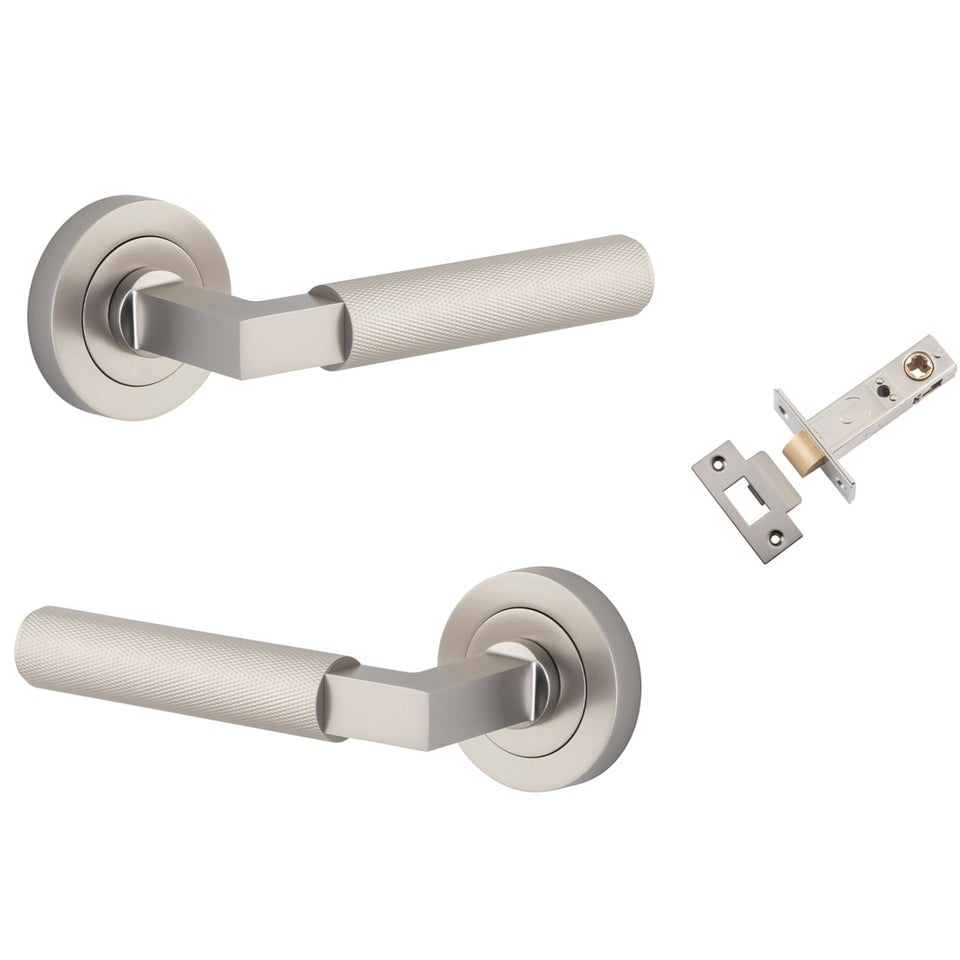
Sold out Iver Brunswick Lever Round Rose Passage Kit Satin Nickel
Checking delivery...$289$60 (-17%) OFFRRP of $349


Passage door handles buying guide
A passage handle holds a door shut with a latch but does not lock. That one fact decides where it goes and what it replaces. This collection holds passage lever and knob sets for interior doors, plus passage sets for cavity sliding doors. This guide sets out what passage means, how it differs from privacy and dummy handles, what a set includes, which numbers decide fit and how to choose a finish. The figures here come from each product listing, so check the product page for your model. For other functions, see privacy door levers, dummy door handles and interior door handles.
What passage means
A passage handle has a latch that keeps the door closed but no locking function. Both handles turn the latch from either side, and the door opens with a turn and closes with a click. It suits hallways, laundries, wardrobes and other internal doors that only need to open and close. It is also called hall and closet hardware. Passage is the default choice for any door that does not need to lock, and it is the function most homes use on the most doors.
Passage, privacy or dummy
The three functions differ in what the handle does. A passage set latches and does not lock. A privacy set is a passage set plus a lock that is engaged from inside, for bathrooms and bedrooms. It can have an outside emergency release, opened with a coin or a pin through the hole in the outside rose, and it is not security hardware. A dummy handle is fixed, with no latch and no lock, for wardrobe doors, linen cupboards and the fixed panel of a double door. Because it has no latch it needs a separate ball, roller or magnetic catch to keep the door closed. The function is set at purchase, so decide what each door needs before you order. See privacy door levers and dummy door handles.
Do passage handles lock
No. A passage handle has no lock, so it does not secure a door, and it is not a choice for an exterior door that must be locked. For a locked door you need an entrance set with a key lock. See exterior door levers and entry door lock sets. Within the house, a passage set suits doors that stay open or closed with no lock needed, such as living rooms, hallways, pantries and laundries.
Levers and knobs
Passage sets come as levers and as knobs. The Lane Bala passage knob is brass, and the Lane lever ranges are zinc alloy or zinc die cast. The Iver and TradCo ranges include both levers and knobs in brass. Choose by the look and the grip you want. For a full set of lever pages, see door levers and passage lever sets. For knobs, see door knobs.
What a set includes
The most useful fact on a passage listing is whether the latch is included. Most sets here include the latch, the strike plate and the fixings. The Lane lever and knob sets list two levers or knobs, a latch, a strike plate and all fixings. The Zanda Duke, Epic, Boston, Oxford and Futura sets list two levers and the 1131 latch, and the Zurich and Vienna sets list the 1172 latch. The Nidus Collins and Spring sets list a lever set with latch. A smaller group is sold without the latch. The Nidus Knurled Domici passage handles, the Manital Imola, Erica and Ratio passage sets, and the Nidus Metro passage set are all listed with the latch sold separately. Check the box contents before you order, because a handle set without a latch cannot operate the door.
Numbers that decide fit
Four numbers decide fit: backset, door thickness, the hole and the lever size. The backset on the sets in this collection is 60mm. Door thickness varies by maker. The Lane Bala suits 32 to 45mm, and most other Lane sets suit 33 to 45mm or 35 to 45mm. The Lockwood Velocity sets suit hinged doors 32 to 45mm, and the Nidus Collins and Spring sets suit 34 to 45mm. The Zanda Duke Return suits 35 to 53mm, and the Iver and TradCo sets suit 35 to 60mm. The hole matters too. The Lane sets have a 50 to 54mm cross bore, and the Lockwood Velocity rose is 63mm. Large rose adaptor kits are available to cover existing holes, and the Zanda rose adaptor kit is 65mm by 10mm. Measure your door and match the numbers for the set.
Lever size and grip
Levers are sized by length, projection and finger clearance. The Lockwood Velocity levers are 122mm long, with a projection of 54.5 to 64mm and a finger clearance of 34.5 to 47.5mm, on a 63mm round rose. The Lockwood Vivid levers are 127 to 140mm long. The Zanda Duke lever is 116mm long on a 52mm rose with a 54mm projection. The Iver levers run from 120 to 145mm long, and the TradCo backplate sets run from 152 to 240mm. Finger clearance is the gap between the lever and the door, and a larger gap gives more room for the hand.
Passage sets by maker
Each maker has its own materials and fittings. Open Lane door levers for zinc and brass sets with the latch included. Open Lockwood door levers for the Velocity and Vivid series, and Zanda door hardware for stainless steel and solid brass sets. Iver door hardware and TradCo door hardware cover lacquered, plated and powder coated brass. Nidus door hardware and Manital Italian made handles cover solid brass and zinc alloy sets. For period homes, see heritage door hardware.
Lockwood Velocity series
The Lockwood Velocity passage sets are solid zinc die-cast levers on a large round rose of 63mm by 12.5mm. The levers are named by model, such as the Element L3, Glide L4, Spire L2, Summit L1, Hakea L28, Saltbush L34 and Gidgee L37. Each lever is 120 to 122mm long, with a projection of 54.5 to 64mm and a finger clearance of 34.5 to 47.5mm, so the models differ in how far the lever stands off the door and how much room the hand has. The sets suit hinged doors 32 to 45mm thick. A square trim version comes in matte black. See Lockwood door levers.
Iver and TradCo passage sets
The Iver passage kits are brass, for doors 35 to 60mm thick with a tubular latch and a 60mm backset. They come on a round rose, an oval backplate or a rectangular backplate, with projections from 52 to 61mm, and the finishes include lacquered brushed brass and signature brass and powder coated matte black. The TradCo passage sets are brass on long backplates or round roses, for 35 to 60mm doors with a tubular latch and a 60mm backset. The TradCo rim lock and milled edge knob passage set has a 112mm backset because it fits as a rim lock, not a tubular latch. Check the latch type against your door: a tubular latch needs a round hole through the door edge, and a rim lock is surface fixed. See Iver door hardware.
Nidus and Zanda passage sets
The Nidus Collins and Spring passage sets are zinc alloy levers on a round rose, 128mm long with a 60mm projection, for doors 34 to 45mm thick on a 60mm backset, and both list the latch in the set. The Zanda Duke passage set is a stainless steel lever 116mm long and 11mm thick on a 52mm rose, and the Duke Return passage set is zinc alloy, electroplated, for doors 35 to 53mm thick on a 60mm backset. The Zanda Baxter and Kent passage sets list a 65mm backplate that can sit over existing 55mm holes. See Nidus door hardware and Zanda door hardware.
Materials and finishes
Material varies by set. The Iver and TradCo passage sets are brass with a lacquered, powder coated or plated finish. The Nidus Collins and Spring sets are zinc alloy. The Manital sets are solid brass. The Lockwood Velocity sets are solid zinc die-cast, and the Lockwood Vivid sets are 304 stainless steel with a PVD finish. The Zanda Duke, Epic and Boston sets are stainless steel, and the Zurich and Vienna sets are solid brass. Finish pages: matte black, brushed nickel, chrome, brass, gold, white and gun metal.
Passage sets for sliding doors
Cavity sliding doors need a flush passage set. The Zanda round cavity passage kit is a 65mm round flush pull in stainless steel, and the Nidus Mardeco radius flush pull set includes two flush pulls and an end pull. See sliding door passage sets, sliding door handles, cavity slider hardware and flush pulls.
Fitting a passage set to a hinged door
A passage set fits in a few steps once the door is prepared. A tubular latch needs a large hole through the face of the door and a smaller hole into the edge, and both are drilled to meet. Most new doors come pre-drilled to suit a standard set, so measure the door before you buy.
- Check the backset and the door thickness against the numbers for your set.
- Slide the latch into the edge hole with the angled face towards the closing direction, and screw the faceplate in.
- Fit the first handle through the latch spindle, then fit the second handle and fix the two together.
- Fit the strike plate to the frame so the latch lines up, and cut the recess so the plate sits flush.
- Test the handle from both sides before you close the door, and adjust the strike plate if the latch catches.
When replacing an existing set, keep the old fixings and the old latch until you have checked the new set against them. A new rose covers the area around the hole, so a wider rose hides marks left by a previous set.
Choosing passage handles for a family home
Passage sets get used more than any other hardware in the house, so the grip matters. A lever is the easiest option for young children and for adults carrying a load, because it works with a push of the hand or elbow. A knob suits an original panel door and a smaller room, where the look matters more than the ease of use. Pick a finish that hides marks if the doors are handled with wet or dirty hands. Knurled and brushed finishes show marks less than polished ones.
Use the same range on every passage door in a hallway, so the handles read as one set. If you change the finish from one room to another, change at a door, and keep the hinges in the finish of the handle on that door. See door handles for the full set of functions and door hardware for the rest of the range.
Matching finishes through the house
Mixing finishes is possible, but limit the number of finishes in one space and coordinate them with hinges and locks. It adds that brushed or knurled textures show marks less than smooth finishes, and that cleaning needs a soft cloth and mild soapy water, avoiding bleach, abrasives and harsh chemicals. Keep the hinges and stops in the finish of the handle. See hinges and door stops.
Common mistakes
The guides and listings point to the same errors. The first is ordering a passage set for a door that needs to lock, or a privacy set for a hallway. The second is ordering a handle set sold without the latch and then finding the door will not operate. The third is ordering by finish before checking the door thickness and the hole. The fourth is ordering one dummy handle when a door needs one on each face, or a pair when it needs one. The fifth is mixing the lever from one range with the rose or latch of another. Each is avoided by reading the function line and the box contents.
Our recommendation
Choose passage for every interior door that does not need to lock. Confirm that the latch is included, check the door thickness against the listing, and match the finish and range across the house. Use privacy sets for bathrooms and bedrooms, and dummy handles only where a door has a separate catch or sits fixed. That order avoids the common mistakes: a set without a latch, a lock where none is needed, and a handle that does not suit the door thickness.
Questions about passage door handles
What is a passage door handle?
It is a handle with a latch, and no lock. It turns from either side, so the door opens whenever someone presses the lever. Passage sets suit hallways, laundries, wardrobes and closets, where nobody needs to lock the door.
What is the difference between a passage handle and a dummy handle?
A passage handle turns and moves the latch. A dummy is fixed, with no latch, and the door is held shut by a separate catch. Dummies are sold singly or as a pair, so check the listing. Privacy adds an inside lock to the passage design, with an emergency release outside, and it is not security hardware.
Can I change the function later?
Not without buying another set. The function is built into the latch and the handle, so decide it for each door before you order.
Can I use a passage handle on an outside door?
Not on its own. A passage set has no lock, so an external door needs an entrance set or a separate lock. Passage sets are for interior doors that stay unlocked.
Covering old holes
A new set sometimes has to cover marks or a larger hole from the old one. A large rose adaptor kit covers old holes, and a bigger rose can hide the marks around a larger preparation. The Zanda adaptor kit listing covers that case. Check the size of the old hole against the rose before you order.
Materials and sizes
The materials differ by range. The Iver and TradCo passage sets are lacquered or powder coated brass, and the Nidus Collins and Spring levers are zinc alloy. The Manital levers are solid brass, the Lockwood Velocity levers are solid zinc die-cast, and the Vivid levers are 304 stainless steel with a PVD finish. The Zanda Duke lever is 116mm long on a 52mm rose.
The Lockwood Velocity levers are 122mm long with a 63mm rose, a projection of 54.5 to 64mm and finger clearance of 34.5 to 47.5mm. The Vivid levers run from 127 to 140mm. Door thickness is 35 to 60mm on the Iver and TradCo sets, 34 to 45mm on the Nidus sets, and 32 to 45mm on the Lockwood. The backset is 60mm across the Zanda, Lane, Iver, TradCo and Nidus listings.
Handle height
The accessible range is 900 to 1100mm above the floor, with about 1050mm common. That is a vendor figure, so verify it for your project. In a renovation, match the height of the handles already on the other doors so the rooms read alike.
Which sets include the latch
The latch is the item to check. The Lane, Lockwood and Zanda boxes list the latch and strike plate, with a 1131 or 1172 latch on the Zanda sets, and the Nidus Collins and Spring sets include one too. The Nidus Knurled Domici passage set and most Manital sets, such as the Imola, Erica and Ratio, sell the latch separately. A lever without a latch will not work on the door, so add it to the order.
Lever or knob for a passage door
Knobs give less grip, which makes them harder for children, older people, people with a disability and anyone with wet hands. A round knob is also harder for small children and pets, and it is less likely to catch clothing. Levers offer more grip and can be pressed with an elbow, though loose clothing can catch on them. For doors that many people use, a lever is the easier choice. Knobs suit original panel doors and smaller rooms.
Checking the fit before you order
Measure the door thickness across the edge, and measure the backset from the door edge to the centre of the hole, not across the hole, because holes are often cut larger than they need to be. Most modern hardware needs a 54mm hole. If the backset is inaccurate, the latch may not reach the strike plate and the door will not close properly. Australian homes most often have a 60mm or 70mm backset, so confirm yours. Some latches adjust to suit the backset, and a non-adjustable latch of the wrong size has to be replaced.

