


Flush Pulls
5 Items
-
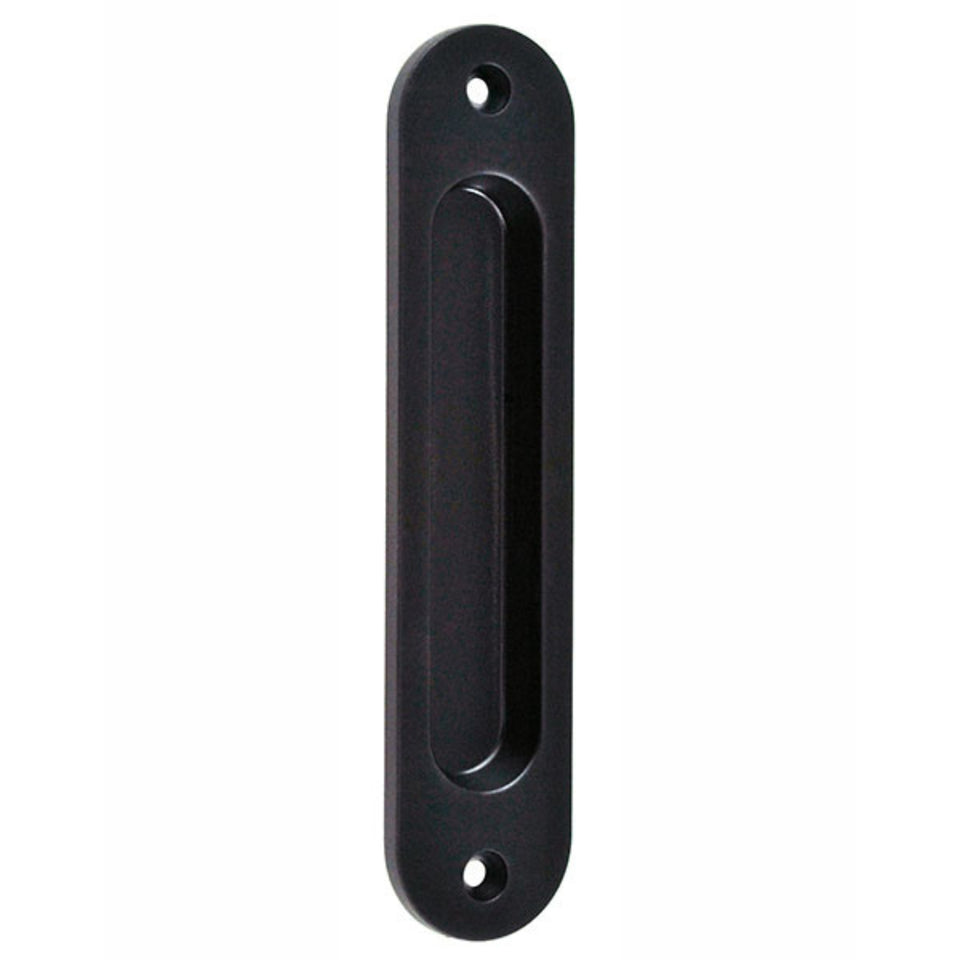
Sold out Nidus Radius Sliding Door Flush Pull Handle 135mm Matte Black
Checking delivery...$19$0 (-0%) offRRP of $19 -

Sold out Nidus Radius Sliding Door Flush Pull Handle 135mm Satin Chrome
Checking delivery...$15$0 (-0%) offRRP of $15 -
$14 Off RRP

Sold out Zanda Square Cavity Sliding Passage Door Handle Kit Brushed Nickel
Checking delivery...$56$14 (-20%) OFFRRP of $70$14 (-20%) offRRP of $70 -
$14 Off RRP

Sold out Zanda Round Cavity Sliding Passage Door Handle Kit Brushed Nickel
Checking delivery...$56$14 (-20%) OFFRRP of $70$14 (-20%) offRRP of $70 -

Sold out Nidus Radius Sliding Door Flush Pull Handle 135mm Polished Chrome
Checking delivery...$15$0 (-0%) offRRP of $15


Flush pulls buying guide
A flush pull is a handle set into the door so that it sits level with the surface. You grip the recess to slide the door, and nothing projects into the opening. That is why flush pulls are the standard handle for cavity sliding doors, where a projecting handle would catch on the wall. This collection holds flush pulls in rectangular, round, square and oval shapes, and the cavity sliding sets that use them. This guide sets out what a flush pull is, how it differs from a flush jamb system and an edge pull, which sizes suit which door, and which numbers decide fit. For the whole sliding door range, see sliding door handles and door handles.
What a flush pull is
Flush pulls are recessed cups set into each face of the door, which you grip to slide it. A flush pull is a recessed handle level with the door, and some are simple recesses while others have ring pulls that stay flush until you pull them out. Because the handle does not project, the door can slide fully into a wall cavity or sit against a frame. Ensuites, walk-in robes, pantries and linen cupboards are common uses, and flush pulls can also suit cabinets.
Flush pull, flush jamb and edge pull
Three terms get mixed up on cavity doors. A flush pull is the recessed cup in the face of the door. A flush jamb is a feature of the cavity unit, where the jambs and tracks sit inside the wall so no frame projects. An edge pull is a small pull on the leading edge of the door that lets you draw it out of the cavity when it is fully recessed. A flush jamb handle tucks into the cavity, which limits you to styles that sit close to the door, and flush jamb setups often benefit from edge pulls. The cavity unit decides which you need, so choose the cavity unit and the pull together. For edge pulls, see sliding door edge pulls.
Shapes
Flush pulls come in rectangular, round, square and oval shapes. Rectangular is the most common shape, round is more traditional and square is a clean architectural look, so match the shape to the rose on your hinged doors. The Zanda Duke and Verve pulls are rectangular, the Zanda round cavity and Visca pulls are round, and the Zanda square cavity sets are square. The Nidus Mardeco range includes rectangular and radius shapes, and the Lockwood Vivid pull is rectangular. Choose one shape across the house so the sliding doors look like part of the same scheme.
Sizes and which door they suit
A rule of thumb helps. A 65mm round pull suits a minimalist look or smaller joinery doors, a 120 by 40mm pull suits smaller cupboard doors or lightweight cavity sliders, and a 150 by 50mm pull is the standard choice for full-height internal sliding doors. The product pages in this collection give the real sizes. The Zanda Duke is 120 by 40mm and 250 by 40mm with a 12mm projection. The Zanda Verve is 37mm wide in lengths from 150mm to 300mm. The Lockwood Vivid is 150 by 50mm. The Lane rectangle pull is 120mm long. The Nidus Mardeco pulls are 190 by 45mm and 203 by 45mm, with a longer 257mm plate, and the Nidus Radius pull is 135 by 29mm. The Iver Puerto pull is 225 by 50mm. Choose the size by the height and weight of the door and the grip you want.
Cut-out and fit numbers
A flush pull needs a recess cut into the door, so the numbers on the product page decide fit. The Lockwood Vivid pull lists a 105mm by 22mm prep hole. The Momo Handles Jena pull is 114 by 34mm with a 2mm projection, 102mm between its fixing points and an 11mm mortice depth, and the Momo Handles Fold pull has 128mm between its fixing points, a 46mm projection and a 12.5mm mortice depth. The Iver Puerto pull has 185mm fixing centres, a 2.5mm projection and suits doors 35 to 60mm thick. The recess depth must fit within your door thickness, and the manufacturer's template should be used so the recess has no gaps. Confirm there is solid material where the pull will be cut, because hollow-core doors only have solid timber in certain areas.
Passage, privacy and entrance sets
A flush pull on its own has no lock. Passage sets are flush pulls on both sides plus an edge pull, with no lock, for laundries, pantries and walk-in robes. A privacy set adds a turn on the inside and an emergency release on the outside, for bathrooms, ensuites and toilets, and an entrance set adds a cylinder so the door locks with a key. The cavity sets in this collection suit different door thicknesses. The Zanda round and square cavity sets suit 32 to 38mm doors, and the Zanda Visca solid brass sets suit a 35mm door. The Nidus square sets with an end pull suit 32 to 47mm and 35 to 55mm doors, and the Nidus Mardeco sets suit 34 to 50mm doors. The Lockwood Vivid cavity slider is 63mm across with a 54mm prep hole and suits 32 to 45mm doors. See sliding door passage sets, sliding door privacy sets and sliding door entrance sets. For the full cavity range, see cavity slider hardware.
Backset on cavity locks
On a cavity lock, the backset is the distance from the door edge to the centre of the lock or turn. The backset varies by product, so give your door supplier the lock's backset and fitting template before the door is pre-machined. The Zanda Visca privacy kit lists a hook latch with a 30mm backset. The Nidus Mardeco privacy sets list 50mm and 35mm backsets. The Nidus square sets list 60mm, the Zanda Duke sliding door Euro lock kit lists 57mm, the Zanda Verve heavy duty kit lists 60mm, and the Lockwood Symmetry set lists 60mm with a spacer ring for thinner doors. The numbers are not interchangeable, so the lock is chosen before the door is machined.
Which flush pull to choose
Choose by door. For a full-height internal sliding door, start at the 150 by 50mm size and the Lockwood Vivid, Iver Puerto, Zanda Verve and Nidus Mardeco pulls. For a cupboard or a light cavity slider, a 120mm pull such as the Zanda Duke, the Lane rectangle pull or the Momo Handles Jena is the smaller option. For a pocket door in a bathroom, choose a privacy set with an emergency release and confirm the door thickness. For a laundry, pantry or robe, choose a passage set with an edge pull.
Materials and finishes
Every pull has its own material. The Zanda Verve is 316 grade stainless steel, and it can be used outdoors. The Lane rectangle pull is 304 grade stainless steel. The Lockwood Vivid pull is 304 stainless steel with a PVD finish. The Nidus Mardeco pulls are zinc alloy, and the Iver Puerto pull is brass with a lacquered or PVD finish. Electroplated finishes are durable and corrosion resistant. Match the finish to the other hardware on the door. See white door handles, matte black door handles, brushed nickel door handles, brass door handles, gold door handles, bronze door handles and chrome door handles.
Flush pulls on hinged doors and cabinets
Flush pulls are not only for sliding doors. Doors that sit flush against the frame are another use, and flush pulls can be fitted to cabinets. Buyers look for flush pulls for hinged doors and cabinets, and the Momo Handles Jena and Fold pulls suit wardrobe sliding doors and cabinetry. For cabinet-specific ranges, see cabinet pull handles and cabinet handles. For entrance pulls, see pull handles.
Makers in this collection
Each brand has its own sizes, fixings and cut-outs, so buy the whole set from one range where you can. See Zanda door hardware and Zanda Verve flush pulls, Zanda Visca cavity sliding hardware, Nidus door hardware and Nidus Mardeco sliding door hardware, Lockwood door levers, Lane door levers, Iver door hardware and Momo architectural door hardware.
Our recommendation
Decide the cavity unit and the door first, then the function: passage, privacy or entrance. Choose a size by the door, measure the thickness against the recess depth, and use the manufacturer's template for the cut-out. Order the pair and the edge pull where the product page sells them separately, keep one shape and one finish across the sliding doors, and match the hinged doors where you can. That order avoids the common mistakes: a pull that cannot recess, a door with no way to draw it out of the cavity, and a set made for a different door thickness.
Questions about flush pulls
What is a flush pull handle?
A flush pull is a recessed grip that sits level with the door face. On a sliding or cavity door there is a recessed cup in each face, so you can slide the door without anything projecting. A separate edge pull on the leading edge lets you draw the door out of the cavity when it is fully inside the wall.
What is a concealed flush pull?
The term describes a pull set into the door so that nothing stands proud of the surface. The Zanda Duke flush pulls fix with concealed fixings and have a projection of 12mm. The Lockwood Vivid flush pull is 150 by 50mm and needs a 105 by 22mm preparation. Always use the manufacturer's template for the cut-out, because the recess has to match the pull.
What is the difference between a flush pull and a flush jamb?
A flush pull is a handle recessed into the door. A flush jamb is a cavity unit with no protruding frame, so the door and the wall finish sit level. Because a flush jamb has no frame to hide behind, the handle styles are limited to those that sit close to the door, and an edge pull helps. The flush pulls on this page suit that kind of door.

