


Brushed Nickel Wastes
13 Items
-
In Stock

Sold out Caroma Basin Pop-up Plug and Waste Brushed Nickel
Checking delivery...$41$0 (-0%) offRRP of $41 -

Sold out Caroma Bath Pop-up Plug & Waste Brushed Nickel
Checking delivery...$53$0 (-0%) offRRP of $53 -
In StockIn Stock SAIn Stock QLD

Sold out Caroma Basin Dome Pop Up Waste Long - Brushed Nickel
Checking delivery...$48$0 (-0%) offRRP of $48 -
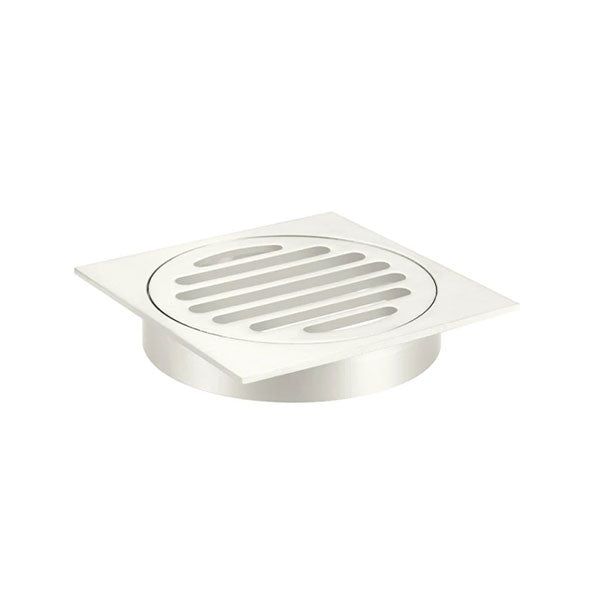
Sold out Meir Square Floor Grate Shower Drain 100mm Outlet - Brushed Nickel
Checking delivery...$124$0 (-0%) offRRP of $124 -

Sold out Caroma 40mm Bottle Trap - Brushed Nickel
Checking delivery...$347$0 (-0%) offRRP of $347 -

Sale On Now!
Up to 70% off across the store, plus free towels and mirrors up for grabs on orders over $800*
-
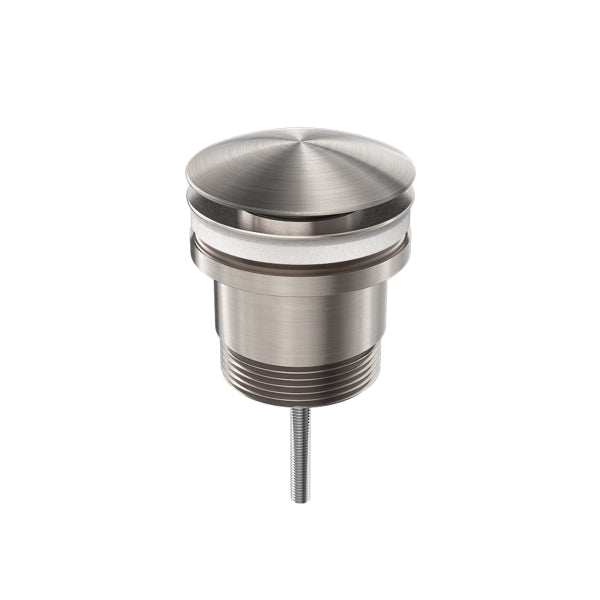
Sold out Nero Universal Pop Up Waste - Brushed Nickel
Checking delivery...$87$0 (-0%) offRRP of $87 -
In Stock
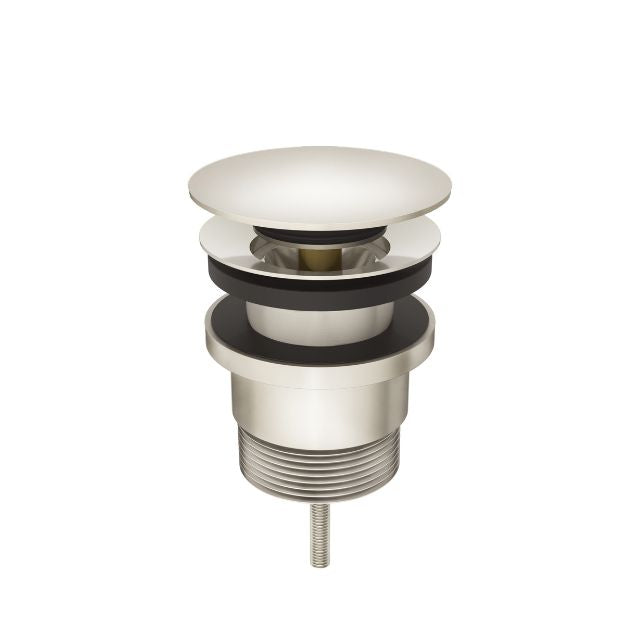
Sold out Meir Universal All-In-One Pop Up Waste - Basin & Bath Brushed Nickel
Checking delivery...$124$0 (-0%) offRRP of $124 -
In Stock
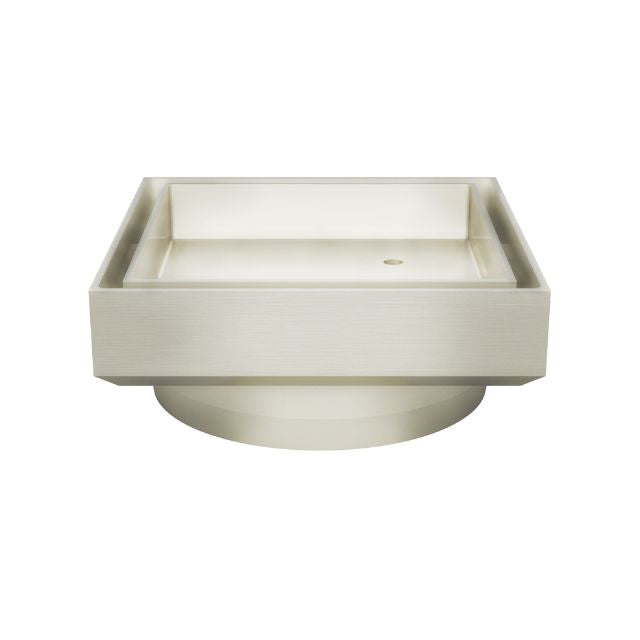
Sold out Meir Shower Waste with Tile Insert Brushed Nickel
Checking delivery...$186$0 (-0%) offRRP of $186 -
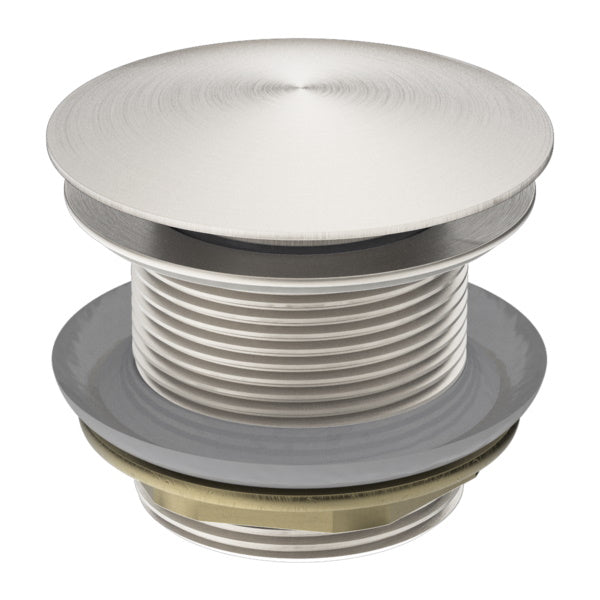
Sold out Nero 40mm Bath Pop-Up Plug With Removable Waste No Overflow Brushed Nickel
Checking delivery...$94$0 (-0%) offRRP of $94 -
-
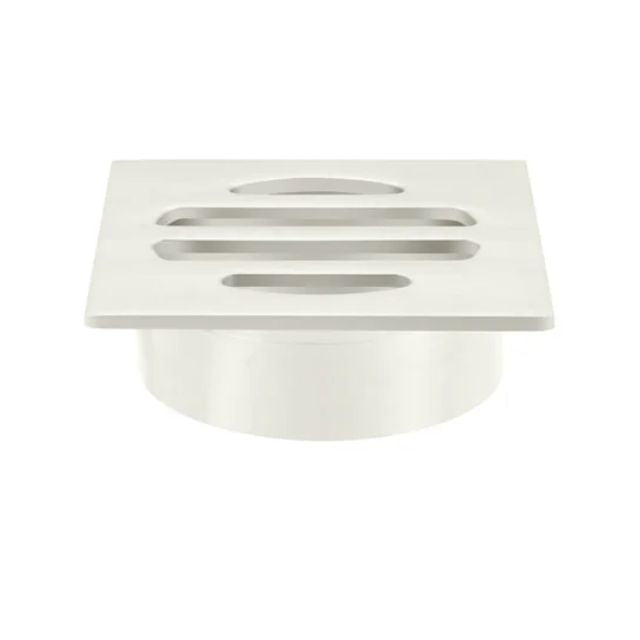
Sold out Meir Square Floor Grate Shower Drain 50mm outlet
Checking delivery...$74$0 (-0%) offRRP of $74 -

Sold out Nero 40mm Round Bottle Trap Brushed Nickel
Checking delivery...$336$0 (-0%) offRRP of $336 -

Sold out Nero 100mm Round Tile Insert Floor Waste 50mm Outlet Brushed Nickel
Checking delivery...$81$0 (-0%) offRRP of $81 -

Sold out Nero 130mm Round Tile Insert Floor Waste 100mm Outlet Brushed Nickel
Checking delivery...$94$0 (-0%) offRRP of $94


Brushed nickel wastes guide
This collection gathers the wastes and traps that come in brushed nickel: basin and bath pop up and pop down wastes, bottle traps for wall hung basins, tile insert floor wastes and channels. Brushed nickel is the most common soft silver finish in Australian bathrooms, and it is also one of the easiest to get slightly wrong, because two makers can call different shades by the same name. The sections below cover what the finish is, how it is made, and how to match a waste to the tap beside it, so the size and the finish both come out right. The matching taps are on brushed nickel tapware.
What brushed nickel is
Brushed nickel is usually a nickel-based plated or coated finish over a base material, and not solid nickel. The fine, directional lines come from brushing the surface during manufacturing, which gives a satin look. It is a soft, muted silver that sits between bright chrome and stainless steel, with less sheen than either.
Colour and undertone
Brushed nickel is a neutral silver with a slight warm undertone. Depending on the light it can read as soft grey, champagne, faint taupe or honey. Under warm lighting it can look faintly creamy, and in cooler spaces it sits closer to a soft silver-grey. The finish comes in three families. Standard brushed nickel has a subtle warm glow. Cool brushed nickel is silvery-grey with blue or pewter undertones. Warm brushed nickel leans towards light gold with amber or honeyed undertones. Check which family the photo shows before you match it to a tap.
How it is made, and what that means for wear
The process behind the finish differs between products. Brushed nickel is often solid brass with a durable PVD coating, and standard brushed nickel can also be a PVD coating on stainless steel. PVD, physical vapour deposition, bonds colour to the metal in a vacuum chamber. PVD is harder than traditional plating, and electroplating is the older method used for chrome, which is hard and easy to clean.
Most products in this collection are PVD and a few are electroplated. For example, the Phoenix brushed nickel wastes are electroplated to keep the colour lasting, while the Meir tile insert shower waste is PVD. Check the finish process on each product, and do not assume. The base metal differs too. The Nero tile inserts and V channels are 304 stainless steel with a PVD finish, and the Meir floor grates, the Fienza bath wastes and most pop up wastes are brass.
Where brushed nickel sits in the room
Brushed nickel pairs well with white and off-white tiles, where it looks clean and subtle, and with natural stone, where it reads warm and elegant. It also sits well against timber cabinetry, darker joinery, greys, charcoal and black accents, and marble and travertine. It suits coastal, contemporary, Hamptons, transitional and minimalist rooms. A waste is small, yet it sits in the middle of the basin or on the floor, so the tile and basin colour around it decide how the nickel reads.
The finish continues across the room. The shower range is on brushed nickel showers, and the smaller fittings are gathered on brushed nickel bathroom accessories. Repeating the finish across those pages is the quickest route to a room that looks planned.
Basin wastes in brushed nickel
Several makers offer a basin waste for a basin with a 32mm waste outlet that connects to 40mm pipework. The Phoenix universal pop-up waste and its flat-topped version suit standard and overflow basins and baths specifying a 32mm waste, with a pop up dome for splash reduction on one and a flat top on the other, and a pull out plug for cleaning. The Otti universal mushroom waste suits basins specifying 32mm in the same way. The Nero universal pop up waste has a G 1 1/2 inch thread and suits basins with or without an overflow. The Fienza universal pull-out waste suits a 32mm or 40mm outlet, with an adaptor included for the 40mm.
The Meir universal all-in-one waste serves basins and baths with 32mm or 40mm outlets, includes an overflow and is Watermark approved to AS/NZS 3718:2005. The Turner Hastings two piece universal waste is solid brass with a high flow rate. The Clark 40mm pop up waste in brushed nickel suits basins with or without an overflow, with one limit: it is for wall hung, under counter, semi-recessed and semi-inset basins only.
Two wastes carry hard limits on the basins they fit. The Caroma dome waste is designed to fit Liano II, Urbane II and Contura II basins and will not fit other basins. The Caroma 40mm pop-up in brushed nickel suits the wider Caroma range. For the sizing guide and the pop up and pop down difference, see basin wastes.
32mm or 40mm, and the standard size
The usual questions are whether a basin waste is 32mm or 40mm, and whether basin wastes come in a standard size. Most Australian vanity basins take a 32mm waste and baths and larger fixtures take 40mm, measured at the part inside the basin. A 32mm waste can connect to 40mm pipe with an adaptor, and a 32mm to 40mm adaptor bridges a mismatch between waste and trap. Check the basin maker's specification first and measure the opening, not the cap.
So there is no single standard, and the basin decides. The most common size is 32mm, and a qualified plumber should confirm the outlet. Measure the opening and not the cap, and use the old waste as the reference when you have it.
Slotted and unslotted
The overflow decides the type. An unslotted waste is completely watertight when closed, while a slotted waste has a slot that carries overflow water away whether the waste is open or closed. A basin or bath with an overflow needs a slotted waste, and one without needs an unslotted waste. Where the overflow hole needs a separate connection to work, choose unslotted. The wrong type can cause leaks or stop the overflow from working. Many wastes here are universal and convert between the two, and the title or feature list says so.
ART Australia pop down wastes
The ART Australia Pop Down basin waste is the flush type, in 32mm and in 32/40mm universal. It is a quick close waste that sits flush in the open position, with a quick remove cartridge for cleaning and drain access, and it suits basins with or without an overflow. The 40mm bath version comes with and without an overflow. The Bath Bend Pop Down and connector adds a 600mm flexible connector and an elbow, a bath thickness adjustment to 12mm and a low body height of 77mm. The brand was previously known as Bounty Brassware.
Bath wastes
Bath wastes are 40mm. The Nero range in brushed nickel includes a 40mm bath pop-up plug with removable waste and no overflow, a 40mm pop up bath waste with overflow, and a short pop up bath waste with an overall depth of 58.5mm for tight spaces and offset drainage. The Fienza pull-out bath wastes come with and without an overflow. The Turner Hastings safety pull-out bath waste has a pull-out feature that is quick for children's safety, with a mechanism strong enough to prevent accidental unplugging. For every bath waste type, see bath wastes.
Bottle traps
A bottle trap replaces the plastic trap under a wall hung basin. Brushed nickel versions come from Caroma, Phoenix, Nero, Turner Hastings and Meir. The Phoenix trap is vertically and horizontally adjustable with a removable cap and suits 40mm pipework. The Turner Hastings deluxe S trap and the Aurora P trap come with a 32x40mm bush and a rubber key seal connector and adjust to suit a 32mm waste, with a PVD brushed nickel finish. The Meir round trap is made for a 32mm waste, with a 41mm actual basin thread size, a length that adjusts from 160 to 385mm and a height of 123mm plus an adjustable 73.1mm. Choose the trap for the pipework and the finish for the waste above it. The full range is on bottle traps.
Floor wastes and channels
Brushed nickel floor wastes come from Meir, Nero, Caroma, ART Australia and Fienza. The Meir square floor grates suit 50mm and 100mm pipe with a wide outer grate for tiling and sealing, and the tile insert shower waste in solid brass takes a tile up to 95 x 95 x 10mm. The Nero tile inserts and V channels are 304 stainless steel with a PVD finish, and the V channels accommodate tiles up to 10mm thick with adhesive. The Caroma square floor wastes have removable grates, and the Caroma tile inserts are stainless steel. The ART Bermuda range includes the standard tile insert and the Lowline Megaflex, which needs less depth beneath the tile. For the wider guide to outlets, falls and tile inserts, see floor wastes.
Matching and care
Repeat the finish across the kitchen tapware, shower fittings and accessories for a cohesive look. That advice carries to the waste. Keep the waste, the trap and the grate in one maker's brushed nickel where you can, and compare any mixed parts in the room's own light before fitting them.
For care, wipe regularly with a soft cloth, use mild soap and water for deeper cleaning and dry the surface afterwards to reduce spotting. Keep abrasive cleaners, scourers and harsh chemicals away from it. The finish resists tarnishing under normal conditions, but harsh chemicals or prolonged moisture without drying can discolour it over time. Avoid vinegar, because vinegar and abrasive cleaners can damage PVD. Lift out cartridges and grates to rinse off hair and soap.
How to choose
Work from the fixture. For a basin, confirm the outlet, the overflow and the fit statement. For a bath, confirm the outlet and the overflow. For a floor, confirm the pipe size and the tile thickness. For a wall hung basin, add a bottle trap and check its depth and height against the wall pipe. Then match the brushed nickel to the tap. The parent page for every maker's wastes, traps and grates is wastes, traps and grates.

