


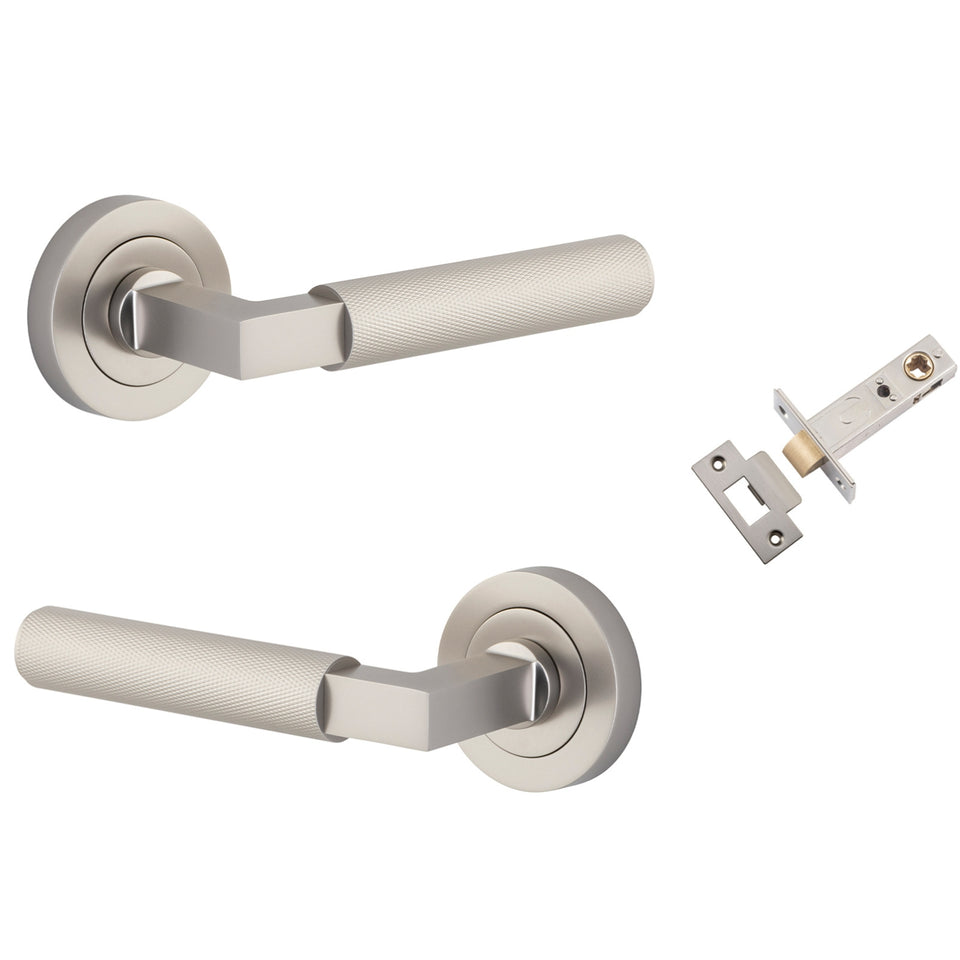
An escutcheon is the decorative plate that surrounds a keyhole or lever spindle on a door, while a rose is the round plate mounted flush against the door face beneath a lever handle or knob. Both cover the fixing points and mechanism opening around door hardware, but they're used for different fittings and are often confused with each other.
The difference between an escutcheon and a rose
An escutcheon is generally used where there's a keyhole to cover, such as on a mortice lock, and often has a small cover or shutter over the keyhole itself to block draughts and improve appearance. A rose, by contrast, is used under a lever handle or knob where there's no keyhole to conceal, just a spindle passing through to operate a latch. The terms get mixed up because both are round or oval plates that sit against the door face, but the presence of a keyhole is the clearest way to tell which one a door needs.
When each is used
Lever handles and knobs typically pair with a rose, since the fitting only needs to cover the spindle hole and the fixing screws beneath the handle. Mortice locks and doors with a visible keyhole typically pair with an escutcheon, since the plate needs to frame the keyhole opening as well as cover the fixing points. Some door configurations use both, a rose for the lever above and an escutcheon for a keyhole below, particularly on traditional mortice lock setups with a separate lever and lock cylinder.
Sprung and fixed roses
Roses come in sprung and fixed varieties, with a sprung rose using an internal spring to help return the lever to its resting position after use, reducing strain on the latch mechanism over time. A fixed rose has no spring and simply sits in place, relying on the latch's own return mechanism. Sprung roses are generally the better choice for frequently used doors, since they reduce wear on the lever and latch over the life of the door.
Escutcheon styles
Escutcheons range from simple flat plates to versions with a hinged cover or shutter that closes over the keyhole when not in use, which helps with draught control and gives a tidier look than an open keyhole. Some escutcheons are also supplied with a bathroom turn and release function built in, used on privacy locks rather than key-operated locks, so it's worth checking which function a specific door needs before ordering.
Matching finish and material
Escutcheons and roses should match the finish and style of the handle set they're paired with, since they sit directly alongside the lever or knob and are one of the first details noticed on a door. Most ranges offer matching roses and escutcheons in the same finish as the handles, so ordering from the same collection avoids any mismatch in tone or plating.
Standard sizing considerations
Roses are generally a standard diameter to suit common lever and knob spindle fittings, while escutcheons need to align precisely with the keyhole position on the specific lock body fitted to the door. Checking the lock manufacturer's spindle and keyhole spacing before ordering an escutcheon avoids a mismatch between the plate's cutout and the lock's actual keyhole position.
Delivery across Australia
Escutcheons and roses ship Australia-wide, with 60-day returns if the finish or fit isn't right once you've checked it against your existing hardware.

